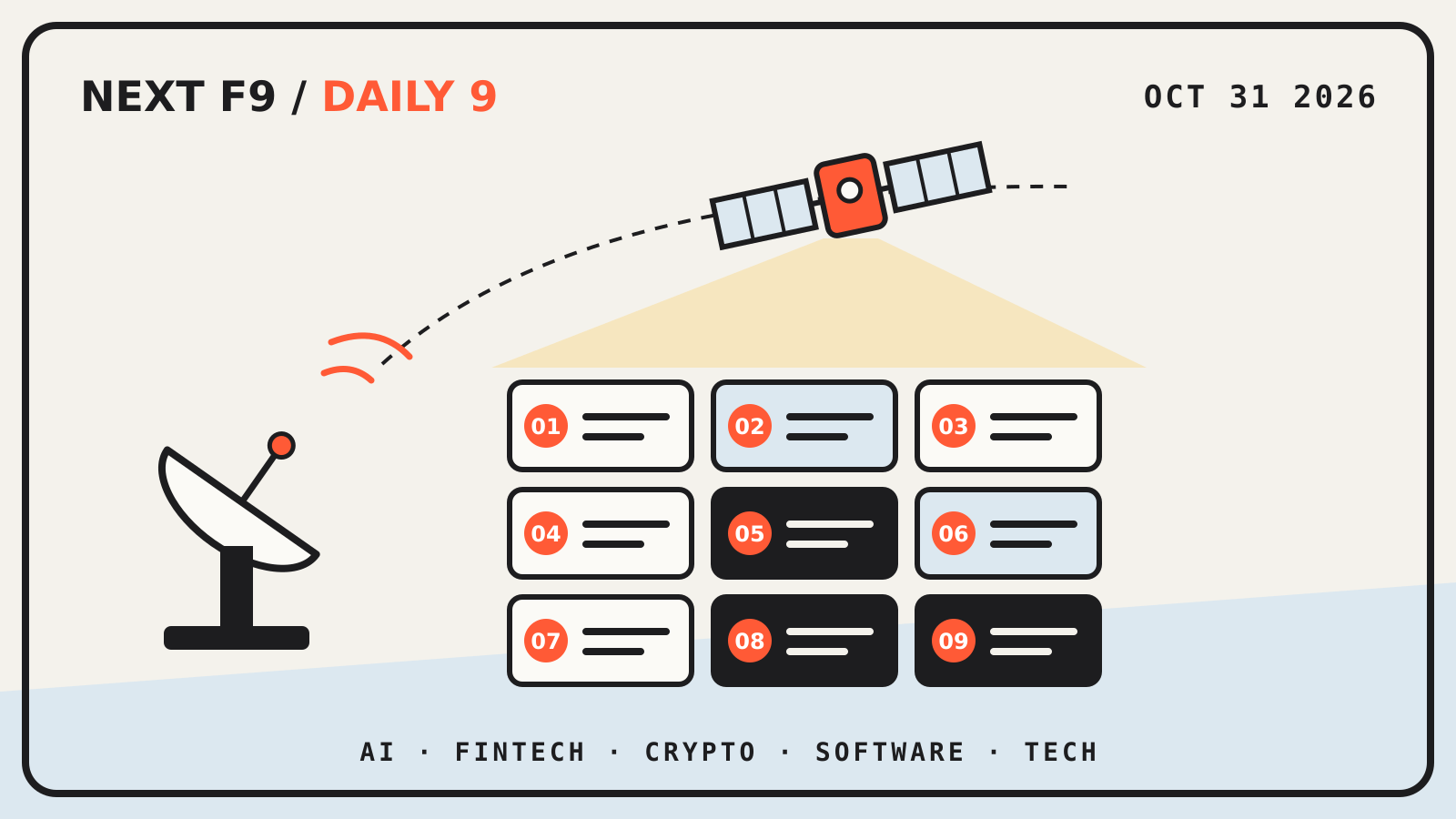
Nine developments from October 27–30 span orbital AI, robotics, payments, crypto, cloud software and security. Dates below are the dates of the source announcements; a prototype, preview or company-reported result is identified as such.
1. Google’s Suncatcher satellite returns an AI response
Google said on October 30 that its Project Suncatcher prototype returned an onboard Gemma 4 response after a prompt was sent from a ground station. The satellite launched on October 1. Google says it has completed early machine-learning tests and will continue examining TPU performance under radiation and thermal stress. It identifies a two-satellite milestone in 2027 as a next step; the first response does not establish long-term reliability or a working orbital data center. Source: Google
2. Google and NASA test a robotic assistant concept
Google Cloud described an early robotic-assistant demonstration on October 27, developed with NASA teams for possible future deep-space support. In a laboratory demonstration, a robot was asked to locate and move a medical bag; Google reported an initial 85% success rate for that early test. The proposed system could support cargo and medical logistics under human direction, but it is a proof of concept, not a robot deployed on a Moon or Mars mission. Source: Google Cloud
3. Stripe reports $1 billion in its own vendor payouts
Stripe said on October 30 that, by that month, it had paid more than $1 billion to over 3,400 US and UK vendors through its Global Payouts product. The company described a staged migration from direct bank integrations and said recipient-data errors accounted for most failures during the migration. Its results are Stripe’s account of its own rollout. It says the product is generally available to businesses in the US and UK; recipient reach is a separate measure. Source: Stripe
4. Visa surveys shoppers on AI assistance
Visa published a US consumer survey on October 30 about holiday shopping and AI. It said 54% of surveyed US adults had used AI for at least one shopping task, compared with 47% in its prior-year research. Those are survey results, not a count of all purchases made through AI assistants. The research also discussed fraud concerns; shoppers still need to verify the seller, final price and return terms before paying. Source: Visa
5. Airtm and BVNK announce wallet-payments partnership
Airtm and BVNK announced a partnership on October 29 to connect wallet funding and payments for users in emerging markets. Their announcement says the integration will use the Stellar network, which had recently been added to BVNK’s platform. The release describes a partnership and intended payment flows; it does not establish that every service is already available to every Airtm user or in every country. Availability and fees need to be checked with the providers. Source: Stellar
6. Coinbase reports higher average USDC balances
Coinbase’s October 29 third-quarter release said average USDC held in its products reached $22 billion, up 49% from a year earlier. That is an average for the quarter and a company-reported metric, not the amount held by every customer or a measure of USDC’s reserves. Coinbase also reported $719 million in net income for the quarter; its adjusted measures use different definitions. The results cover the quarter ended September 30. Source: Coinbase
7. Google Cloud details spend-cap controls
On October 30, Google Cloud described generally available budget spend caps and additions including API management, live estimated-cost reporting and automatic monthly resets. The controls apply to eligible services and can pause covered usage when a cap is enforced. Google says provisioned-throughput requests continue rather than being halted by these caps. Its billing release notes place general availability for a limited set of services on October 13, so the October 30 post is a further explanation, not evidence of a first launch that day. Source: Google Cloud; billing release notes.
8. Agent Registry adds cross-project preview
Google Cloud’s October 30 release notes list a preview for cross-project management boundaries in Agent Registry. The feature is intended to let an organization discover and govern agents, tools and Model Context Protocol servers across multiple cloud projects from a central management project. Preview status matters: teams should check current availability and conditions before treating it as a production commitment. The note describes a registry capability, not a claim that every agent action is automatically safe. Source: Google Cloud release notes
9. TeamViewer publishes a PHP-vulnerability assessment
TeamViewer published an advisory on October 30 about PHP vulnerabilities CVE-2026-109618 and CVE-2026-109619. The flaws are in upstream PHP, not vulnerabilities assigned to TeamViewer products. TeamViewer said its assessment had not identified TeamViewer Remote or Tensor as affected and that no specific customer action was required for the products identified in its bulletin. It also described patching some internal services. Administrators of other PHP installations should consult their own software suppliers’ guidance. Source: TeamViewer
Browse the Daily 9 archive for previous editions.