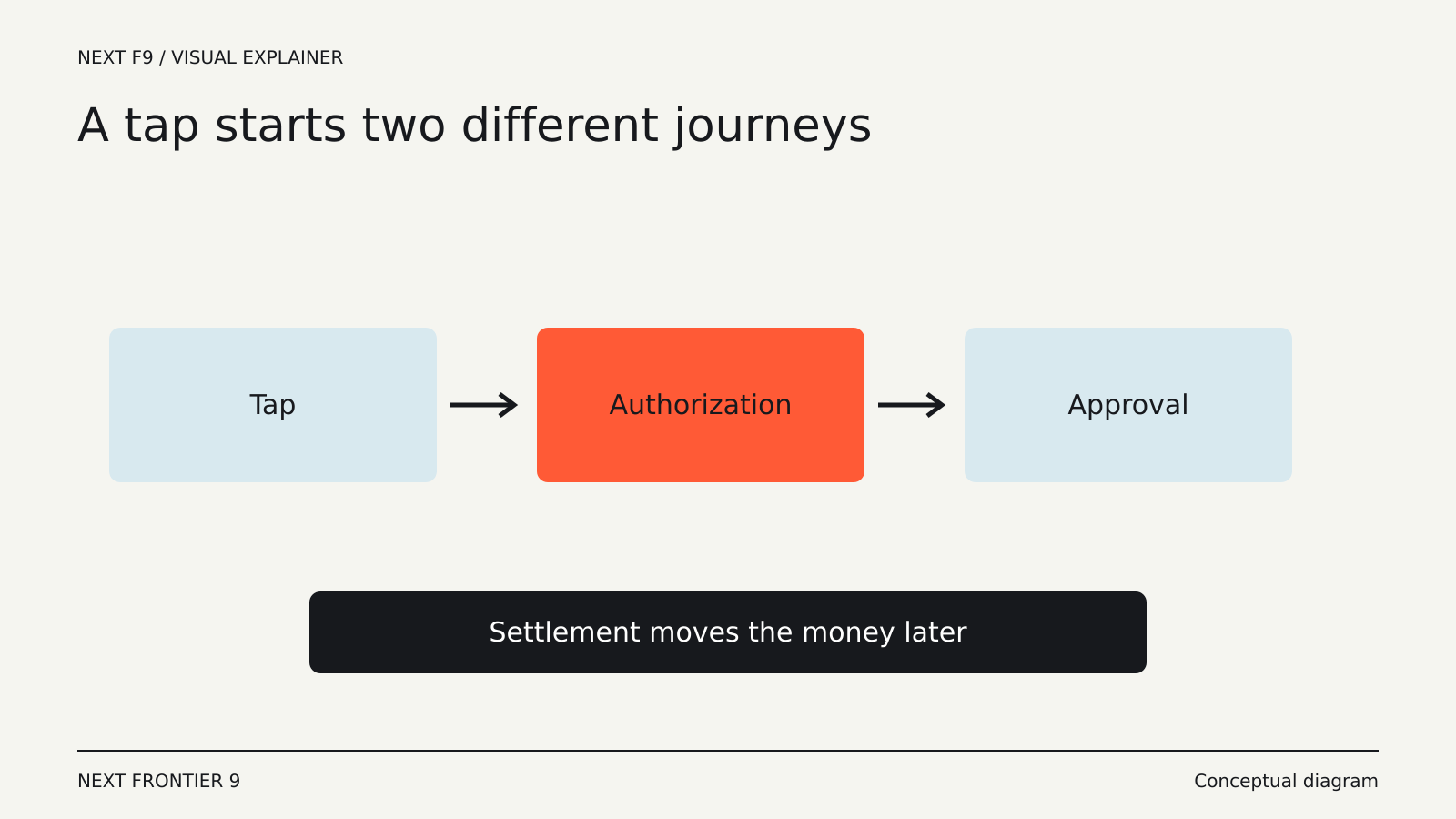
The terminal beeps, the screen says approved and you leave with your coffee. To you, the payment is complete. Behind that short exchange, several companies have passed a request between them, and the final movement of money may still be ahead.
Understanding those stages explains why a transaction can be pending, why a hotel blocks more than the bill and why a refund does not always appear immediately.
The people behind a single tap
The merchant sells the product. The issuer provides your card and manages the account or credit line behind it. An acquirer handles card acceptance for the merchant, while processors and gateways move transaction information between the relevant systems.
The card network provides the rules and connections through which issuers and acquirers communicate. Some companies perform more than one role, and the exact arrangement varies. The logo on the card is therefore not always the name of the organization that holds your account.
Stripe’s explanation of authorization and settlement describes this chain and the distinction between an approval and the later transfer of funds.
What approval actually means
When a payment is submitted, information about the card and transaction travels toward the issuer. The issuer evaluates whether it should authorize the purchase, considering such things as the account’s available funds or credit, the card’s status and relevant verification information.
An approval is a response to that particular request. It does not mean the merchant has already received spendable money in its bank account.
The issuer may reduce your available balance or credit immediately by placing an authorization hold. That is why a payment can affect what you can spend while still appearing as pending in your banking app.
A decline is also specific to a request. It can reflect an account restriction, insufficient available funds or a risk decision. The shop’s terminal may not display the full explanation.
Capture turns the approval into a charge to collect
A merchant can capture an authorized payment, instructing its payment provider to proceed with collecting the amount. In many ordinary purchases this happens automatically. In other situations, authorization and capture are deliberately separated.
A hotel may authorize an amount before the final bill is known. An online store may authorize a card before an order ships. The final captured amount and the release of unused holds depend on the merchant, issuer and payment rules.
If a hold disappears, that does not always mean money was refunded. The merchant may never have completed the charge. A refund relates to a payment that progressed far enough to require a separate return of funds.
Clearing, settlement and payout
After a merchant submits a transaction for collection, the parties reconcile the details and calculate what is owed. Settlement is the movement of funds between the relevant financial institutions.
The merchant’s payout is another useful distinction: it is the transfer into the bank account where the business receives its proceeds. A processor can have a payout schedule, deduct fees or apply a reserve. Your purchase can be settled within the payment chain before the merchant receives a particular scheduled payout.
Timings vary by provider, country, card type and transaction. The few seconds at the terminal should not be interpreted as a guarantee that every later stage is instantaneous.
Why the amount can change
Some purchases begin with an estimate. Fuel stations, accommodation and certain service businesses can use authorizations that differ from the final captured amount. Tips can also affect the final amount in markets where the payment flow supports adjustments.
Currency conversion adds another layer. The amount shown in one currency at authorization may not describe the eventual amount booked in another currency under the issuer’s rules.
That does not make any unexpected difference automatically correct. Compare the receipt, the pending entry and the final posted transaction. They describe different points in the process, and each can help explain a discrepancy.
A refund travels through another process
When a merchant approves a refund, it starts a return payment. The issuer still has to receive and apply the relevant information. The date the shop says “refunded” and the date the credit appears can differ.
A dispute is different again. It involves a cardholder challenging a transaction through the issuer, with evidence and network rules governing what happens. Settlement is not a promise that a transaction can never be challenged.
For a problem, begin with the merchant’s receipt and the status in your card account. Ask whether the entry is an authorization hold, a completed charge or a refund in progress. Those words give customer support a much more precise starting point than “the money is missing.”
The terminal’s beep confirms one useful thing: the payment request was approved at that moment. The rest of the system turns that approval into a recorded charge, a transfer between institutions and eventually a payout to the business.