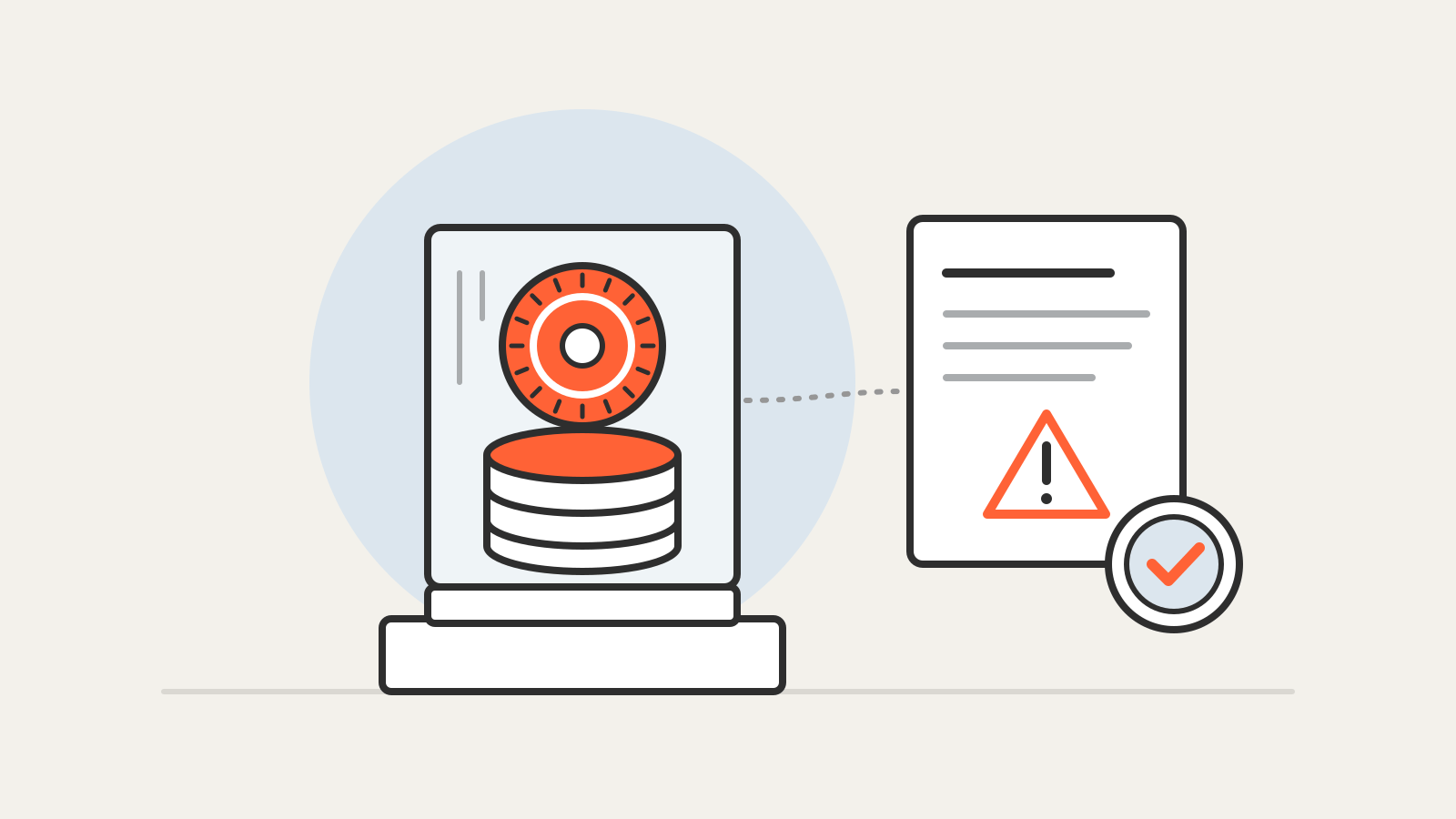
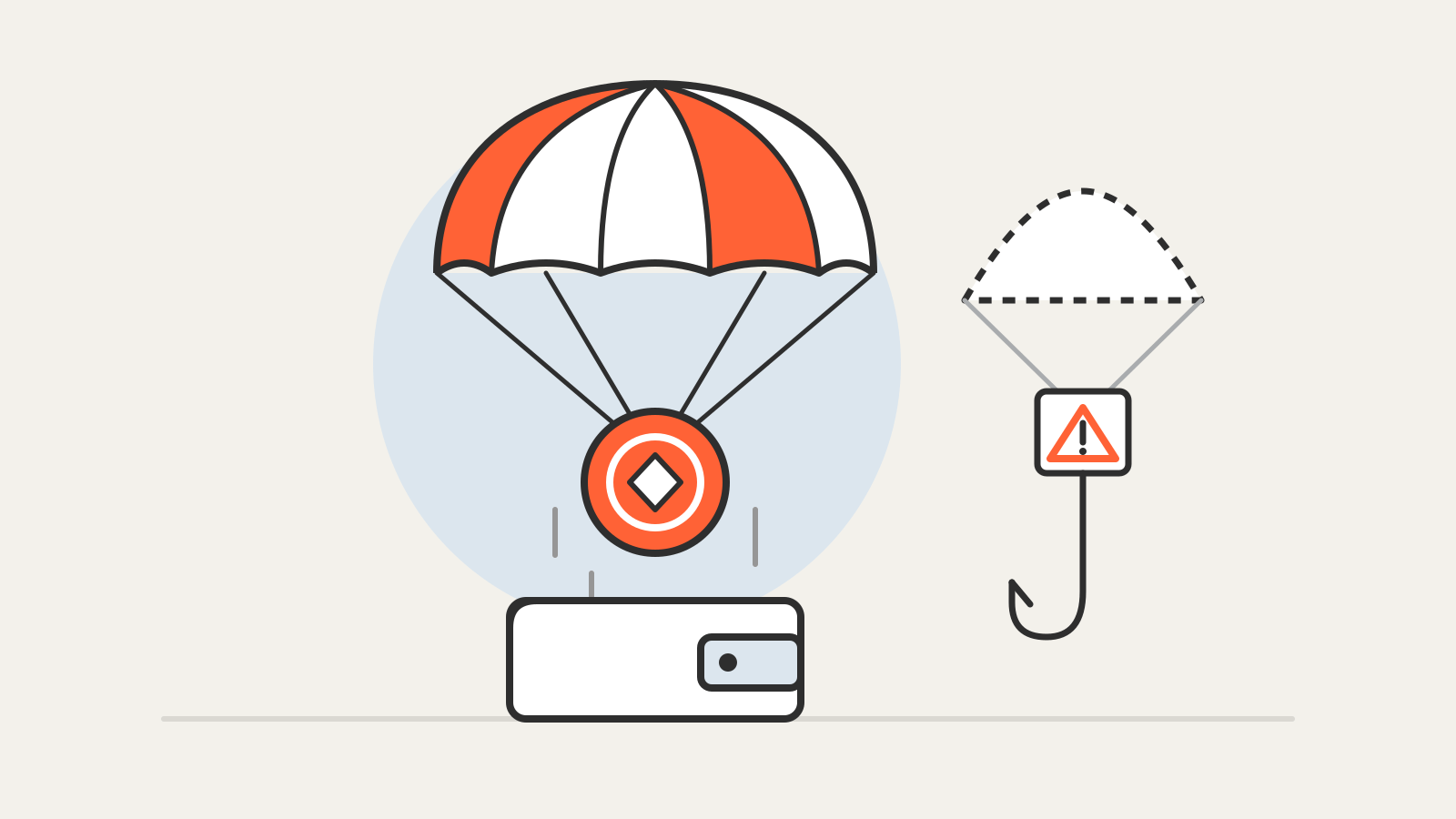
A crypto airdrop is a distribution of tokens to many wallet addresses at once, usually free of charge. The U.S. Internal Revenue Service defines it in plain terms in Revenue Ruling 2019-24: “a means of distributing units of a cryptocurrency to the distributed ledger addresses of multiple taxpayers.” Projects use airdrops to hand a new token to early users or to a whole community. Scammers use the same idea to get unknown tokens into your wallet and lure you into signing something.
This guide explains how a genuine airdrop works, using two well-documented examples, and how to tell it apart from the fake kind.
Why projects give tokens away
MetaMask’s help center describes an airdrop as a token creator sending tokens to addresses, “maybe at random, maybe from a list of users of a particular dapp or sidechain,” and notes that this was once a common part of launching a new token. MetaMask: airdrop scams
The goal is usually distribution. A token that governs a protocol, for example by letting holders vote on changes, needs holders. Giving part of the supply to people who already used the service spreads ownership beyond the founders and investors.
How a genuine airdrop works
Most airdrops follow the same three steps, whatever the network.
- The snapshot. The project picks a moment in the blockchain’s history and records which addresses qualify. Because every transaction is public, eligibility can be computed from on-chain activity alone.
- The allocation. A published formula turns that activity into an amount per address.
- The claim. Either tokens are sent to each address directly, or eligible users send a claim transaction to a smart contract within a set period. A claim is an ordinary transaction, so it costs a network fee.
Example: the UNI airdrop
When Uniswap Labs launched the UNI governance token on September 16, 2020, it made 15% of the 1 billion genesis supply claimable by past users, based on a snapshot ending September 1, 2020. Every address that had ever called the Uniswap v1 or v2 contracts could claim 400 UNI, about 100 million UNI across 251,534 addresses. Uniswap noted this included roughly 12,000 addresses that had only ever submitted failed transactions. Historical liquidity providers shared about 49 million UNI under a separate formula. Uniswap Labs: Introducing UNI
Example: the ARB airdrop
The Arbitrum airdrop in 2023 shows the more elaborate model. According to the Arbitrum DAO’s eligibility documentation, 11.62% of the initial ARB supply went to users. Eligibility used a points system: one point for each qualifying action before the February 6, 2023 snapshot, such as bridging funds or making transactions in several distinct months. Fewer than three points meant no allocation; scores mapped to amounts from 625 to 10,250 ARB.
Two details matter for readers. First, the claim window was limited: claiming opened on March 23, 2023 and ended on September 24, 2023, and the documentation says ARB “is no longer claimable.” Second, the project tried to filter out bots. Its anti-Sybil rules deducted points, for instance when all of a wallet’s transactions fell within 48 hours, and disqualified addresses flagged as Sybil accounts. A Sybil, in this context, is one person running many wallets to collect several allocations.
What an airdrop is not
An airdrop is not a reward you can count on. The eligibility rules are set by the project alone. In the UNI case, the snapshot date had already passed when the token and its formula were announced, so nobody could have known in advance exactly what would count. The Arbitrum points table shows how specific such criteria can get.
It is also not a reason to share any secret. The Arbitrum documentation put it in capitals at the top of the page: there was no presale, there was one official website, and users should never share their seed phrase.
How fake airdrops work
Wallet makers and law enforcement describe the same patterns.
Unsolicited tokens with a link. MetaMask describes a common sequence: tokens you never asked for appear in your wallet, you try to swap them and nothing happens, and a message points you to a third-party site to “claim” them. That site either asks for your Secret Recovery Phrase, which hands over the whole wallet, or asks you to confirm a transaction that, in MetaMask’s words, gives the page “permission to take your tokens, rather than give you tokens.” That second trick is a token approval, the same permission a smart contract needs to move tokens on your behalf.
Memo links and phishing. In a June 2025 public service announcement, the FBI described criminals sending NFT airdrops to Hedera wallet users with a memo containing a link. The linked site connected to the victim’s wallet and asked for login and security details, including seed phrases, which the criminals then used to empty the wallet. The FBI notes that the same lure also arrives through social media posts and phishing emails. FBI IC3: PSA I-060325-PSA
Ethereum.org’s security guide sums up the rule of thumb: “no one is going to give you free or discounted ETH.”
Checks before you claim anything
- Start from the project, not the token. Find the claim page through the project’s official website or documentation, as the Arbitrum notice told users to do. Do not follow a link that arrived with the tokens.
- Never type a seed phrase into a website. No genuine claim needs it. Our guide to what a seed phrase is explains why it controls everything.
- Read the transaction before signing. A claim should send tokens to you. A request to approve spending of tokens you already own is a red flag. Ethereum.org recommends against unlimited spending limits for any contract.
- Treat unexpected tokens as bait. MetaMask’s description of airdrop scams starts with tokens nobody asked for. The safe response is to leave them and any attached link alone.
- Use a hardware wallet for anything valuable. Ethereum.org calls hardware wallets the most secure option for storing private keys, though they cannot stop you from approving a malicious request.
Are airdropped tokens taxed?
In the United States, the IRS position in Revenue Ruling 2019-24 covers an airdrop that follows a hard fork: a taxpayer who receives the new tokens has ordinary income equal to their fair market value when the airdrop is recorded on the ledger, provided the taxpayer can dispose of them. If an exchange holds the address and does not yet support the token, the income arises later, when the taxpayer gains that control. The ruling addresses that specific situation; rules elsewhere differ, and this guide is not tax advice.