IonQ reported on September 22 that it had tested an end-to-end quantum error-correction decoder running on a single standard CPU. The company presents the work as a way to reduce the classical-computing overhead required by larger fault-tolerant quantum systems. Source: IonQ
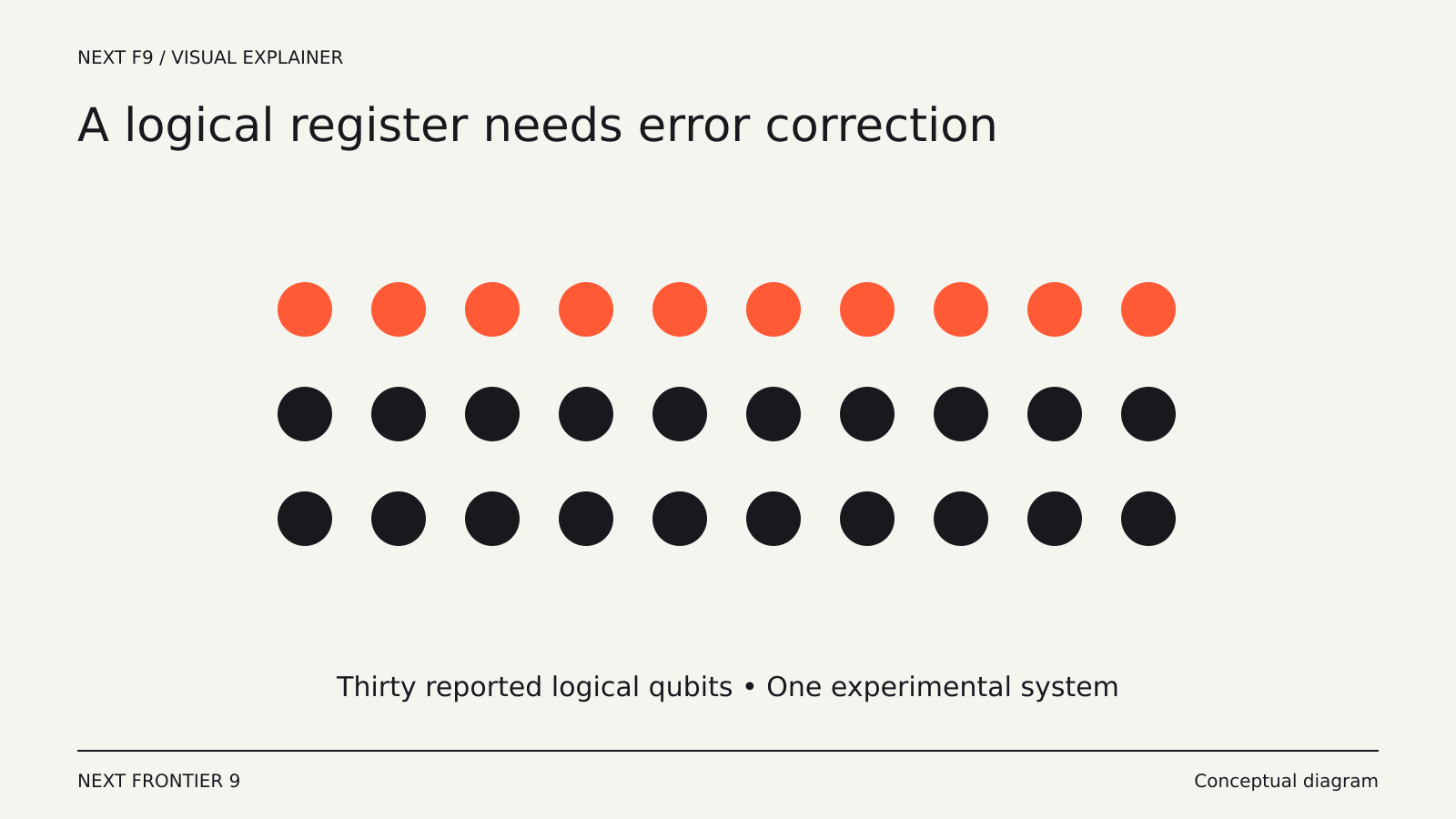
The announcement describes benchmark circuits simulating up to 408 logical qubits and more than 31.5 million quantum operations. Those figures should not be read as a claim that IonQ has delivered a working 408-logical-qubit quantum computer.
The classical work behind a quantum calculation
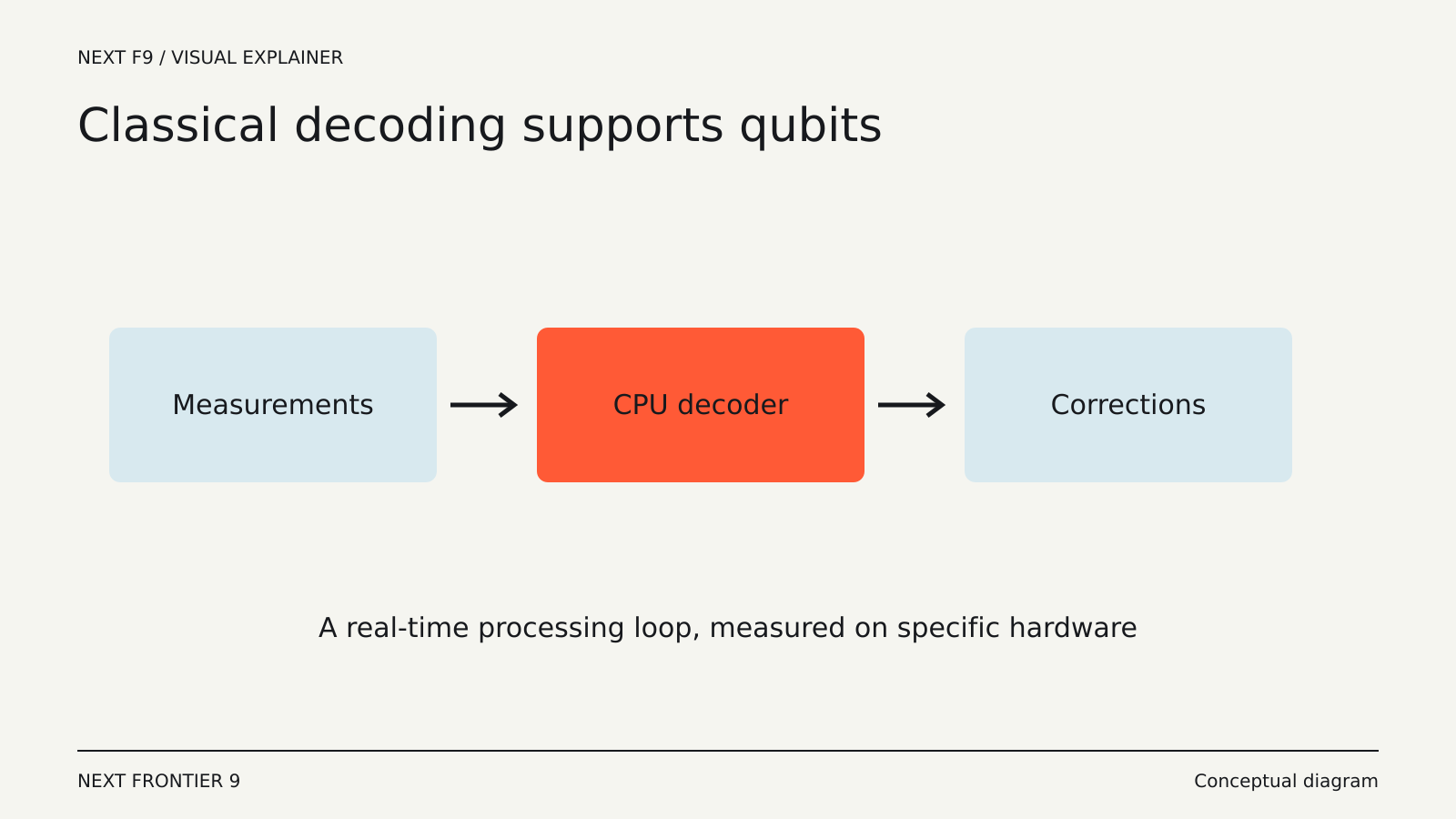
Quantum error correction requires information about errors to be interpreted quickly enough to keep the computation moving. That interpretation is performed by classical hardware.
If decoding cannot keep up, the quantum system may have to wait. Improving the decoder can therefore be valuable even though the decoder itself runs on an ordinary processor.
IonQ says its dual-decoder architecture introduced as little as 0.02% additional stretch time under the standard-noise conditions used in its evaluation. This is a result for the described benchmark setting, not a universal overhead figure for every workload.
Simulation, architecture and hardware are different evidence
The release links the result to IonQ’s Walking Cat architecture and its longer-term scaling roadmap. It also points to technical research published on arXiv.
A decoder benchmark evaluates a component of a larger system. A practical machine additionally needs physical qubits, control hardware, reliable operations and integration between the classical and quantum parts.
The announcement’s “industry first” framing is IonQ’s own claim. Next F9 has not independently reproduced the benchmark or established priority across competing research.
What the result could change
A decoder that can handle the required workload on modest classical hardware could simplify parts of a future system’s cost and engineering requirements.
That possibility is meaningful because adding quantum capacity can also increase the amount of classical processing needed to operate it. The relevant measure is whether the complete system can execute useful work reliably, not only how many physical qubits it contains.
Further evidence will come from the technical details, independent examination and integration into larger experiments. For now, IonQ’s announcement identifies a specific classical bottleneck and reports a way to reduce it under the tested conditions.