Reap and Visa announced a collaboration on September 23 to expand stablecoin-linked Visa card programs across more than 100 markets. The companies say the initiative extends Reap’s issuing infrastructure beyond Asia and Latin America into EMEA and Africa. Source: Visa’s announcement
The agreement concerns infrastructure that fintech companies and businesses can use to build card programs. It is not a statement that one consumer card has become immediately available to every resident in all of those markets.
Stablecoins behind a familiar card payment
The announced use cases include stablecoins as collateral, repayment of card balances with stablecoins and cross-border corporate spending. Reap provides functions such as card processing, program operations and the frameworks needed to launch a program.
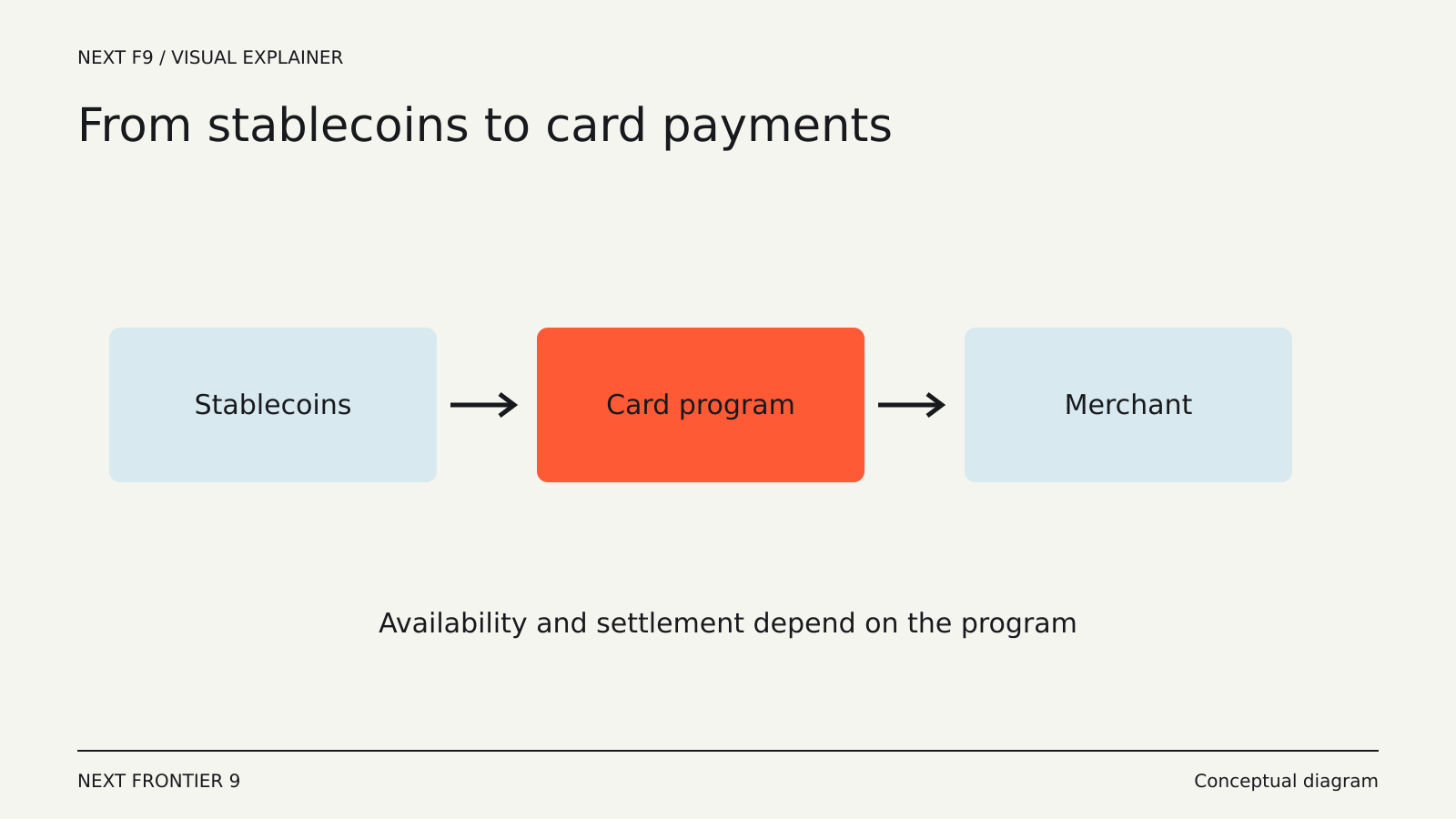
For a merchant, the payment can still arrive through an ordinary card-acceptance experience. The stablecoin component can sit in funding, treasury or settlement behind the card.
That distinction is important. A stablecoin-linked card does not necessarily mean the shop receives tokens directly or that the customer is making a blockchain transaction at the terminal.
Settlement and liquidity
The announcement says Reap participates in Visa’s stablecoin-settlement program in Asia Pacific. The companies describe blockchain settlement as a way to move obligations outside traditional banking hours and reduce the need for some prefunded balances.
Those are infrastructure objectives and company claims. The effect on a cardholder’s fees, credit terms or transaction experience depends on the specific program built on top.
Our card-payment explainer separates the authorization a customer sees from the later settlement and payout stages.
Some elements remain plans
Reap says it intends to introduce multicurrency stablecoin-card capability. Visa and Reap also describe exploring payment paths involving AI agents operating within user-defined parameters.
Those elements should be read as future work, rather than functions already available in every program covered by the collaboration.
The announcement does not supply a complete market-by-market rollout schedule or a universal fee table. Individual launches remain subject to local rules, partner decisions and product terms.
The broader significance is the use of stablecoins inside established card infrastructure. The practical next evidence will be specific programs with clear eligibility, supported assets, fees and launch dates—not simply the number of markets named in the partnership.