Zest Protocol announced a mainnet demonstration of Bitcoin Collateral Vaults on September 23. The system lets participants deposit native bitcoin into a vault on Bitcoin and borrow USDC on Ethereum, according to the project’s announcement.
The demo limits collateral to 0.001 BTC per wallet. Zest describes it as access to the real system before a production launch, so it should not be confused with a fully unrestricted release.
How the project describes the route
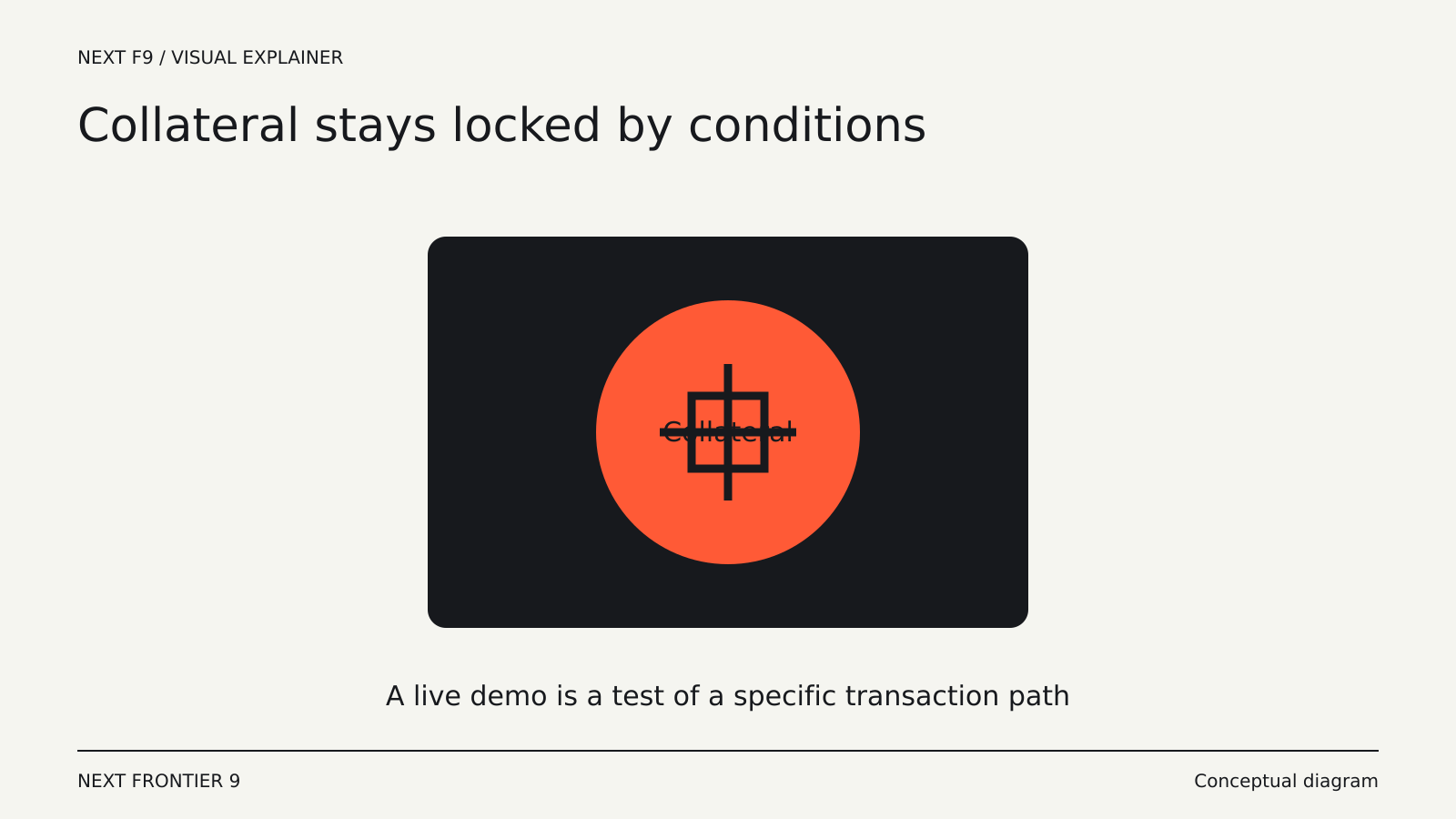
Zest says bitcoin remains in a Taproot vault on Bitcoin’s base layer, while an associated collateral record is represented on Ethereum. Ethereum smart contracts handle the borrowing side.
The project states that permitted destinations for the bitcoin are signed at deposit and that each vault holds one depositor’s funds. It also describes partial withdrawals and liquidation of only the required portion of collateral.
These are claims about the system’s design from its developer. They are not an independent security assessment by Next F9.
A mainnet demo still uses real assets
“Demo” can sound like a risk-free simulation. In this case, the announcement explicitly says the system operates on mainnet with real bitcoin and USDC.
The collateral cap limits the size of a position, but it does not establish that the contracts or cross-chain mechanisms are free of defects. Borrowing also introduces liquidation conditions that are distinct from simply holding bitcoin.
The announcement describes a timelocked return route for a debt-free vault if services become unavailable. The exact conditions and implementation need to be read in the technical documentation rather than inferred from the headline.
Cross-chain verification is a central question
Zest says the vaults are designed for BitVM proof verification, connecting the state of the Ethereum loan to settlement on Bitcoin.
For a system spanning two networks, the important questions include how state is verified, what assumptions are made about participants and what happens during disputes or outages. The launch article does not by itself resolve every one of those questions.
Our explainer on tokens across networks covers why a cross-chain experience can introduce dependencies beyond the asset being used.
Zest says its existing Stacks products continue separately. The new demonstration is a specific experiment in using bitcoin as collateral while keeping the underlying coins on Bitcoin. Production readiness will need evidence beyond the fact that a capped mainnet route is now accessible.