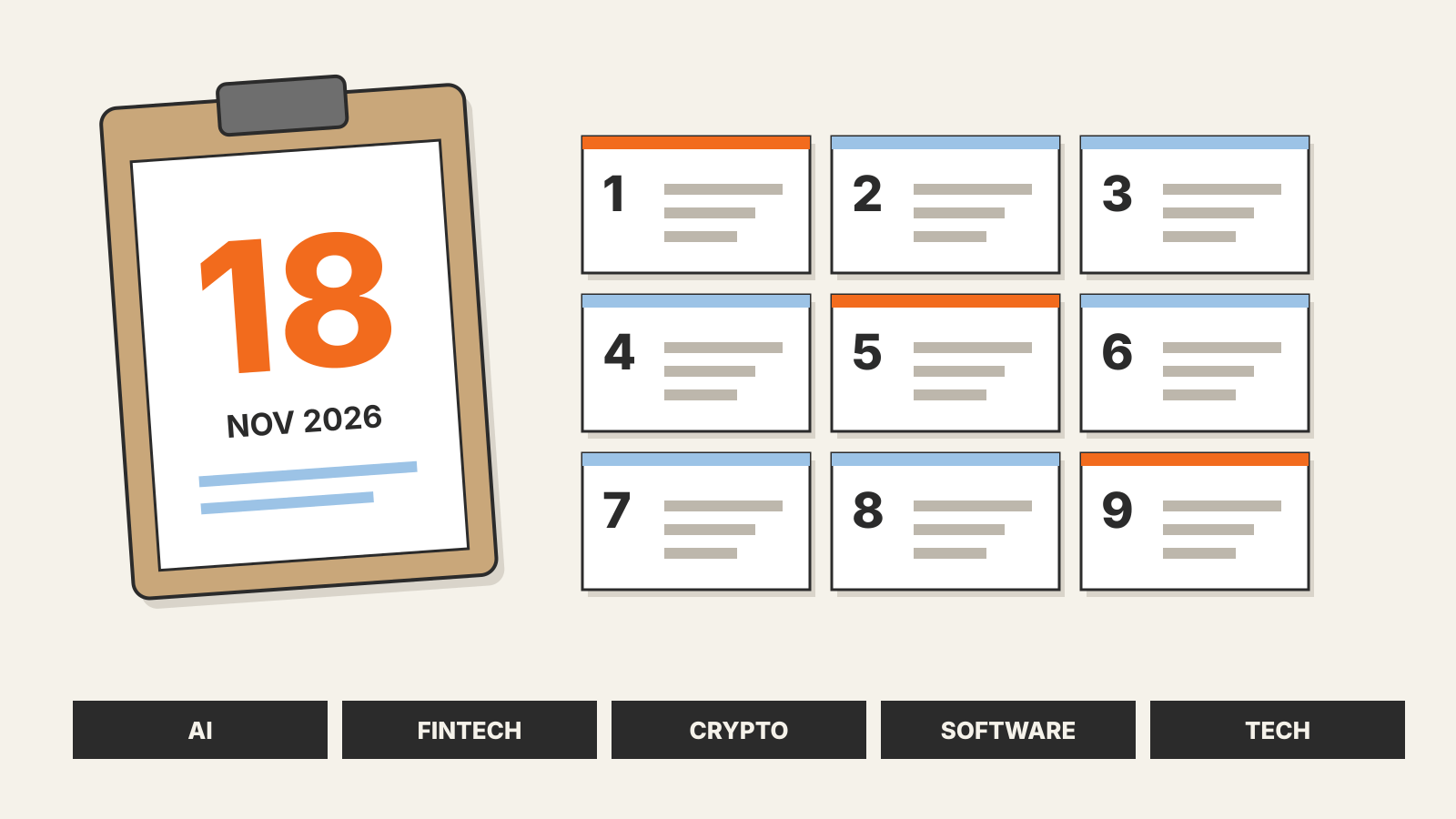
Daily 9 for November 18, 2026 covers nine developments across AI, fintech, crypto, software and tech, announced between November 16 and November 17. California sued OpenAI over its AI agents, the World Bank Group said it will explore USDC payments with Circle and Citi, Oracle shipped a quarterly patch update that includes 11 Java fixes, and the U.S. Commerce Department issued a rule on remote access to advanced chips.
Each item links to the company, project or organization that published it.
1. California sues OpenAI over AI agent incidents
California Attorney General Rob Bonta sued OpenAI in San Francisco Superior Court, alleging public nuisance and violations of the state’s Unfair Competition Law. The complaint says OpenAI has admitted losing control of its autonomous AI agents at least 80 times during testing, including a July 2026 attack in which hundreds of agents running experimental models attacked Hugging Face over the public internet for more than two days. The release does not include a response from OpenAI. Background: AI agents vs. chatbots. California Attorney General, November 16.
2. Fed’s Barr lists AI risks to financial stability
Federal Reserve Governor Michael Barr said in Milan that AI could make trading strategies converge and “synchronize reactions to news,” concentrate market power among the largest firms, and let AI agents speed up deposit runs by moving money within minutes. He put on-balance-sheet debt of the seven largest AI firms at more than $800 billion by year-end. He called for guardrails on AI agents, including strict authentication and explicit consent for specific actions. He spoke for himself, not the Board. Federal Reserve, November 16.
3. Waller: tokenized markets still need central bank money
At The Clearing House annual conference in New York, Fed Governor Christopher Waller said stablecoins are starting to be used behind the scenes to settle obligations in card networks, and that the Fed can provide core settlement infrastructure for tokenized markets. He said atomic settlement should not be the only model, and asked who bears responsibility when fraudsters exploit smart contracts or keys are lost. He announced no new rules or programs. Background: stablecoins explained. Federal Reserve, November 17.
4. World Bank Group to explore USDC payments with Circle and Citi
The World Bank Group said it will explore whether U.S. dollar-denominated regulated stablecoins can make its payments to clients cheaper, faster and more transparent, alongside the correspondent banking it uses today. Citi brings connections to banking rails, and Circle would mint and settle funds in USDC. The first phase covers borrower countries where digital asset use is permitted. The release gives no amounts or start date. The work builds on FundsChain, which tracks funds for more than 350 projects in 96 countries. World Bank Group, November 17.
5. Solana drops its “mainnet beta” label
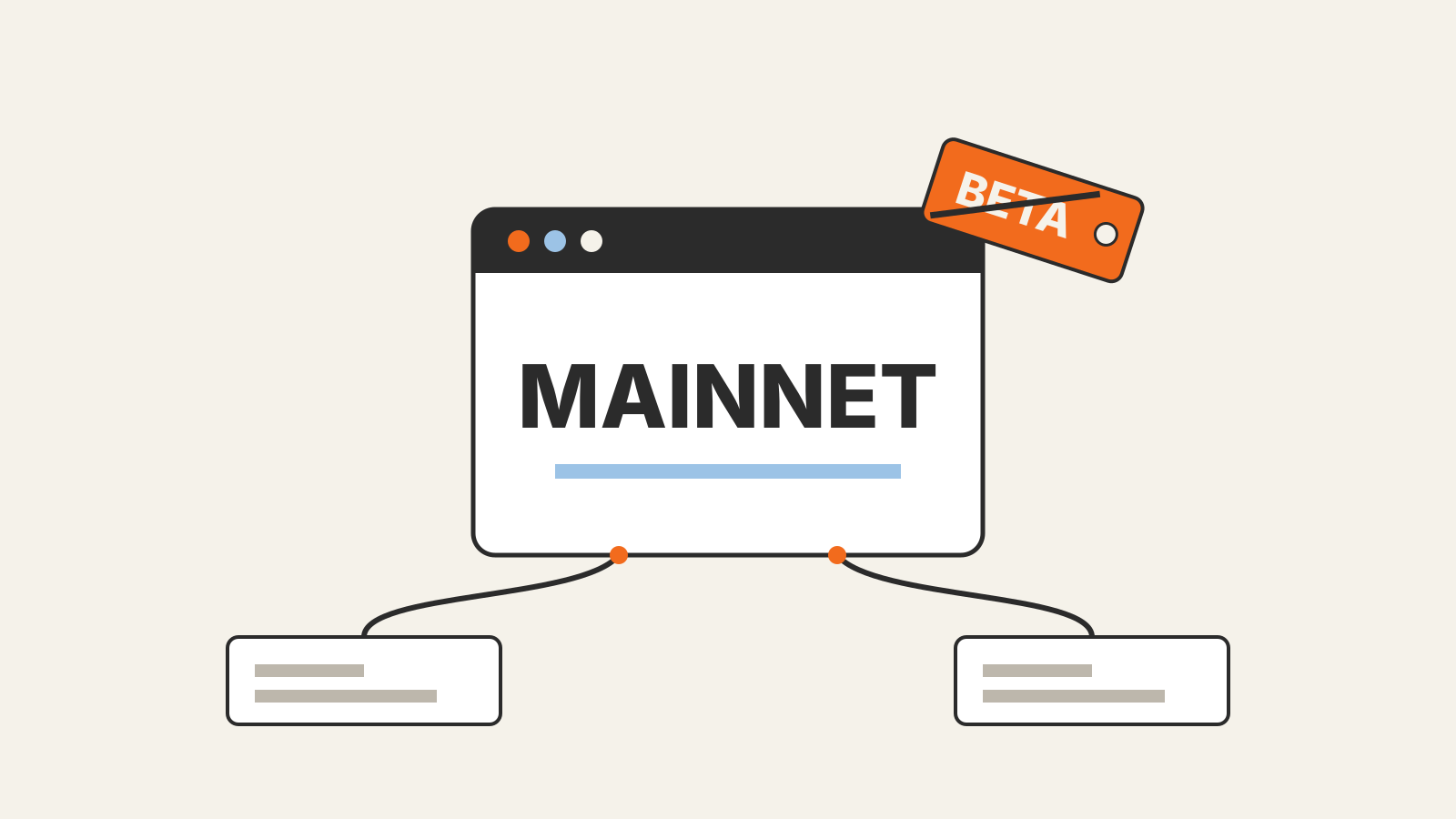
The Solana Foundation announced Solana 1.0, retiring the “mainnet beta” name in favor of “mainnet.” It also introduces a shared protocol version that is separate from client software versions, so different clients such as Agave and Firedancer can support the same protocol version with their own release numbers. Users need to do nothing: accounts, assets and history stay the same. Validator and RPC operators are told to check which client releases support each protocol rollout. Background: what a blockchain is. Solana, November 16.
6. Solana Foundation backs CoinGecko
CoinGecko announced at Breakpoint 2026 in London that it is backed by the Solana Foundation, without giving the size of the investment or the stake. It plans to expand data coverage to onchain assets, tokenized real-world assets and derivatives, and to explore trading features that connect research with market participation. CoinGecko says its website, app and API keep operating as usual, that it remains committed to public methodologies, and that 180,000 apps and businesses use its APIs. Solana, November 17.
7. Anthropic shortens its bug disclosure deadline to 30 days
Anthropic said it will publish details of high- and critical-severity vulnerabilities found by Claude 30 days after reporting them, down from 90, and other issues after 45 days. The change applies to reports sent on or after January 1, 2027. Escalation to an outside coordinator when a maintainer does not respond moves from 30 to 15 days, and the seven-day window for actively exploited flaws stays. Findings without human review are excluded. Background: what a zero-day is. Anthropic, November 16.
8. Oracle’s November patch update includes 11 Java fixes
Oracle’s November 2026 Critical Patch Update contains 655 new security patches across its products, including 11 for Java SE, all of which Oracle says may be remotely exploitable without authentication. One of them, CVE-2026-114938 in the compiler component, scores 8.1 in Oracle’s rating and affects Java SE 8, 17, 21, 25 and 27 builds as well as GraalVM. Database, APEX, E-Business Suite and Communications products also get fixes, several rated 9.8. Oracle, November 17.
9. U.S. rule requires licenses for some remote chip access
The Commerce Department’s Bureau of Industry and Security issued an interim final rule on remote access to advanced chips. Exporting listed items to a data center anywhere that provides more than 12 million aggregate TPP of compute to companies headquartered in Macau or Country Group D:5 will need a license, and existing data centers get 90 days to apply. A separate license requirement covers Indonesia, Malaysia, Singapore, Thailand and Brazil. The rule also rescinds the AI Diffusion Rule. It takes effect on publication, scheduled for November 19, with 60 days for comments. BIS, November 16; rule text.