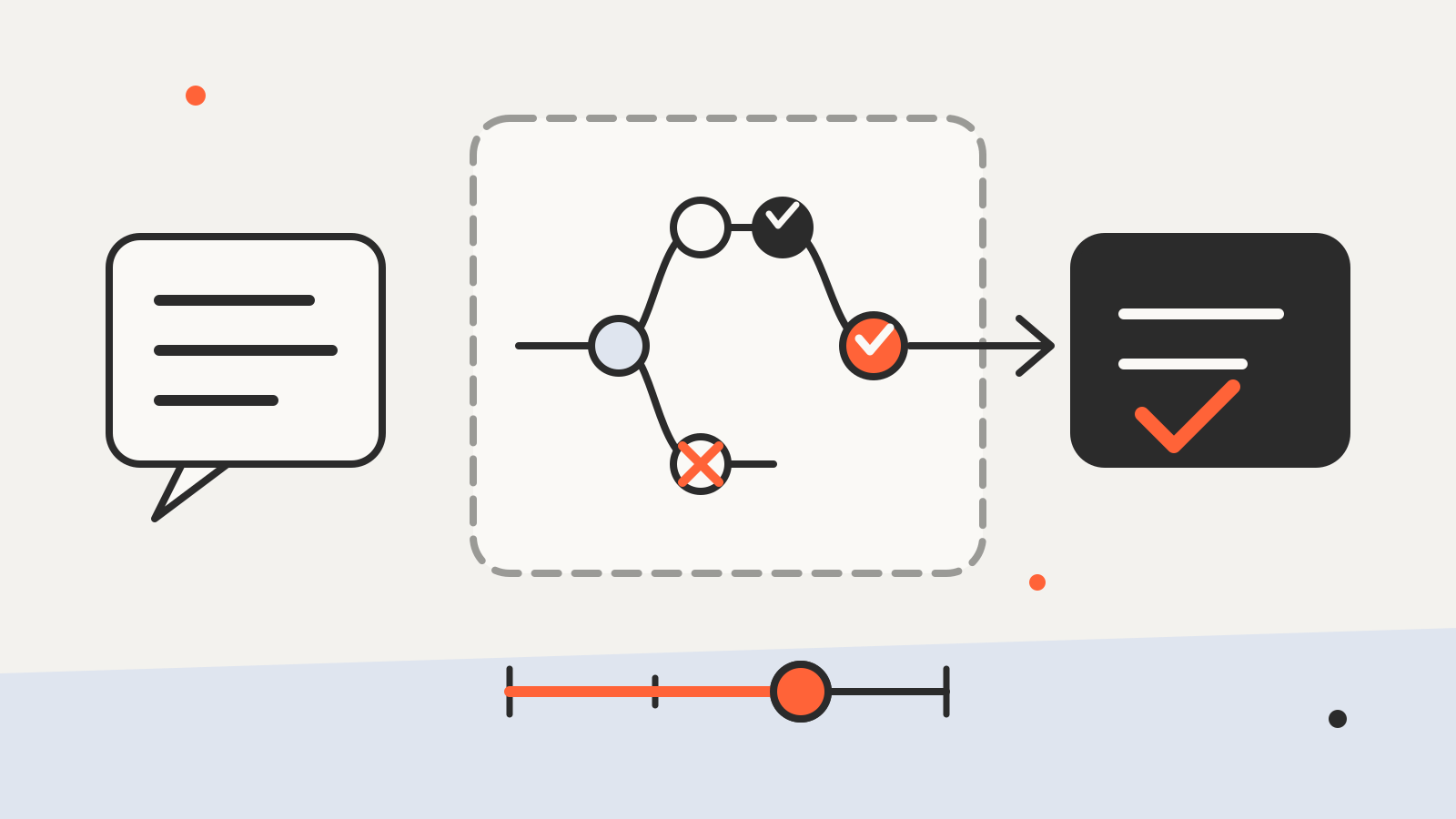
What is a reasoning model? It is an AI model that works through a task in hidden intermediate steps before it writes the answer you see. OpenAI’s developer documentation says its reasoning models use internal reasoning tokens before producing a response, which helps them plan, use tools, inspect alternatives and recover from ambiguity. The visible reply is the end of that process, not the whole of it.
That extra work changes how these models behave in practice. They can be slower, they cost more per request, and most providers give you a setting for how hard the model should think. This guide covers what “reasoning” means in the documentation of OpenAI, Anthropic and Google, what the controls do, and when the extra effort is worth it.
Quick answer A reasoning model spends extra computation on intermediate steps before answering. Those steps usually stay hidden or appear only as a summary, they count toward your token bill, and you can often tune how much of them the model does.
What happens before the answer
Ordinary chat models turn a prompt directly into a reply. A reasoning model first generates a stretch of internal working, then the reply. OpenAI’s guide describes the benefit as better handling of complex problem solving, coding, scientific reasoning and multi-step agentic workflows.
You generally do not get to read that working. OpenAI says reasoning tokens are not visible through its API and that its reasoning items stay opaque, with the API returning no reasoning text. What you can see is how many tokens the model spent: the exact count appears in the usage object of the response.
Other providers show a little more, but not everything. Anthropic’s documentation says the thinking you see can be a summary, and that you are billed for the full thinking process, not for the summary. Google’s Gemini documentation describes thought steps that carry an encrypted signature representing the model’s internal reasoning state, plus an optional text summary that may be empty depending on configuration or on how much the model reasoned.
Effort: how much it thinks
Most of the practical control sits in a setting for effort.
OpenAI’s reasoning.effort parameter guides how much the model thinks. Supported values depend on the model and can include none, minimal, low, medium, high, xhigh and max. Lower effort favors speed and lower token usage, while higher effort lets the model think more completely. Some models reject certain values, so the setting is not interchangeable across models.
Anthropic takes a different route, which it calls adaptive thinking. The model evaluates each request and decides whether to think and how much. An effort level from low to max acts as soft guidance, and no level guarantees that a thinking block appears. An older approach that set a fixed thinking budget in tokens is described as legacy, and Anthropic’s extended thinking page says Claude 4.7 and later models reject requests that use it.
| Provider | How thinking is controlled | What you can see |
|---|---|---|
| OpenAI | A model-dependent effort setting | A token count, not the reasoning text |
| Anthropic | Adaptive thinking guided by an effort level | A summary of the thinking, plus thinking-token counts |
| Thinking built into Gemini models | Thought steps with a signature and an optional summary |
What it costs
Reasoning is not free. OpenAI says reasoning tokens are billed as output tokens and still occupy space in the context window. The number varies widely, from a few hundred to tens of thousands per request. Its limit on output, max_output_tokens, covers reasoning tokens as well as visible text, so a response can end before any visible output appears and you can still pay for input and reasoning tokens. OpenAI recommends reserving at least 25,000 tokens for reasoning and output when you start experimenting.
Anthropic’s documentation makes the same point from the other side: thinking tokens are billed as output, the billed output count does not match the visible text, and a separate usage field reports how many tokens were thinking. Thinking blocks from earlier turns that stay in the conversation are billed as input. That ties into the context window: the reasoning a model does competes for the same limited space as your prompt and its reply.
When the extra thinking helps
The vendors’ own guidance gives a rough rule. Reasoning models suit hard, multi-step work: debugging code, solving a math or science problem, or planning a task that calls several tools. For latency-critical jobs that gain little from reasoning, such as voice, quick retrieval or classification, OpenAI’s guide says the lowest effort setting is the better fit.
So the sensible approach is to match effort to the task. A request to reword a sentence or look up a fact does not need a long internal deliberation, and a thorny bug might. Start with a lower setting, watch the token counts, and raise effort only where answers are measurably better.
Thinking more does not make a model reliable. A reasoning model can still state something false with confidence, so checking its sources still matters; our guide to AI hallucination covers how. For the model family underneath, see what a large language model is.