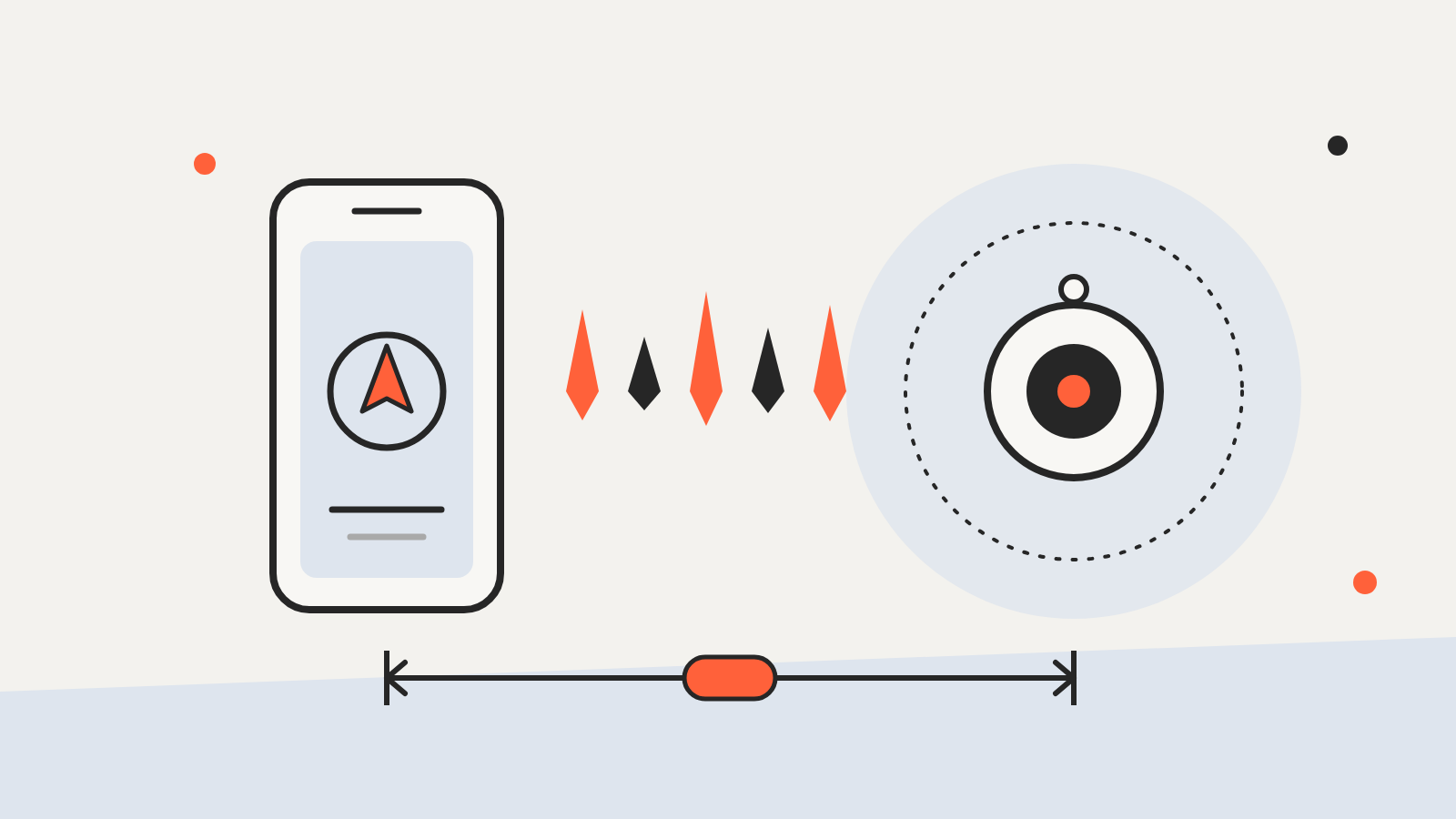
Ultra-wideband (UWB) is a short-range radio built to measure the distance between two devices precisely. It is what lets a phone point you toward a lost tracker tag a few feet away, or lets a car unlock as you walk up with your phone in your pocket. So what is ultra-wideband doing differently from Bluetooth or Wi-Fi? It times how long a very short radio pulse takes to travel between devices, instead of guessing distance from how strong a signal looks.
What makes a radio “ultra-wideband”
The name describes how much spectrum the signal occupies. U.S. rules give a precise definition. Under the FCC’s Part 15 rules, a UWB transmitter is one whose signal, at any moment, spans at least 500 MHz of bandwidth, or at least 20% of its center frequency. Google’s Android developer documentation uses the same thresholds: more than 500 MHz, or more than 20% fractional bandwidth.
The signal is also very low power. The Car Connectivity Consortium, which writes the digital car key standard, says UWB for car keys runs at a maximum of -41 dBm/MHz and does not need licensed spectrum. In its spectrum position paper, it says UWB shares bands with satellite, scientific, fixed-link and radar users on a non-interference basis, and that IEEE UWB channel 9 (7.7 to 8.3 GHz) is now the only channel usable worldwide.
How UWB measures distance
A wide band lets a radio send extremely short pulses. The FiRa Consortium, the industry group that certifies UWB devices for interoperability, explains why that matters. UWB’s steep, narrow pulses make it possible to mark the moment a signal arrives with much more certainty. Distance then comes from time of flight: the travel time of the radio wave multiplied by the speed of light.
In practice, the devices exchange timed messages. FiRa’s certification program, for example, covers the car key method, which it describes as a one-to-many double-sided two-way ranging protocol between a phone and several points on a car. Android’s documentation describes the roles: one device is the Controller, or initiator, and the other is the Controlee, or responder. Before ranging starts, the two devices find each other and swap session details through another channel, such as Bluetooth Low Energy. UWB then handles the precise measurement.
Google describes the result as ranging with an accuracy of about 10 centimeters. The Car Connectivity Consortium says ranging in a typical digital car key setup is accurate to under 10 cm, and that UWB keeps working in fog, rain and parking garages where signals bounce around.
Why timing beats signal strength
Traditional proximity methods estimate distance from received signal strength: a strong signal suggests the other device is close. FiRa’s secure ranging overview explains why UWB measures time instead: it is harder to spoof time than signal strength. FiRa’s FAQ makes the same point, noting that propagation time and the speed of light are extremely difficult, if not impossible, to alter. That is what makes UWB more resistant to relay attacks, where a thief passes a key’s signal along so a distant key appears to be next to the car.
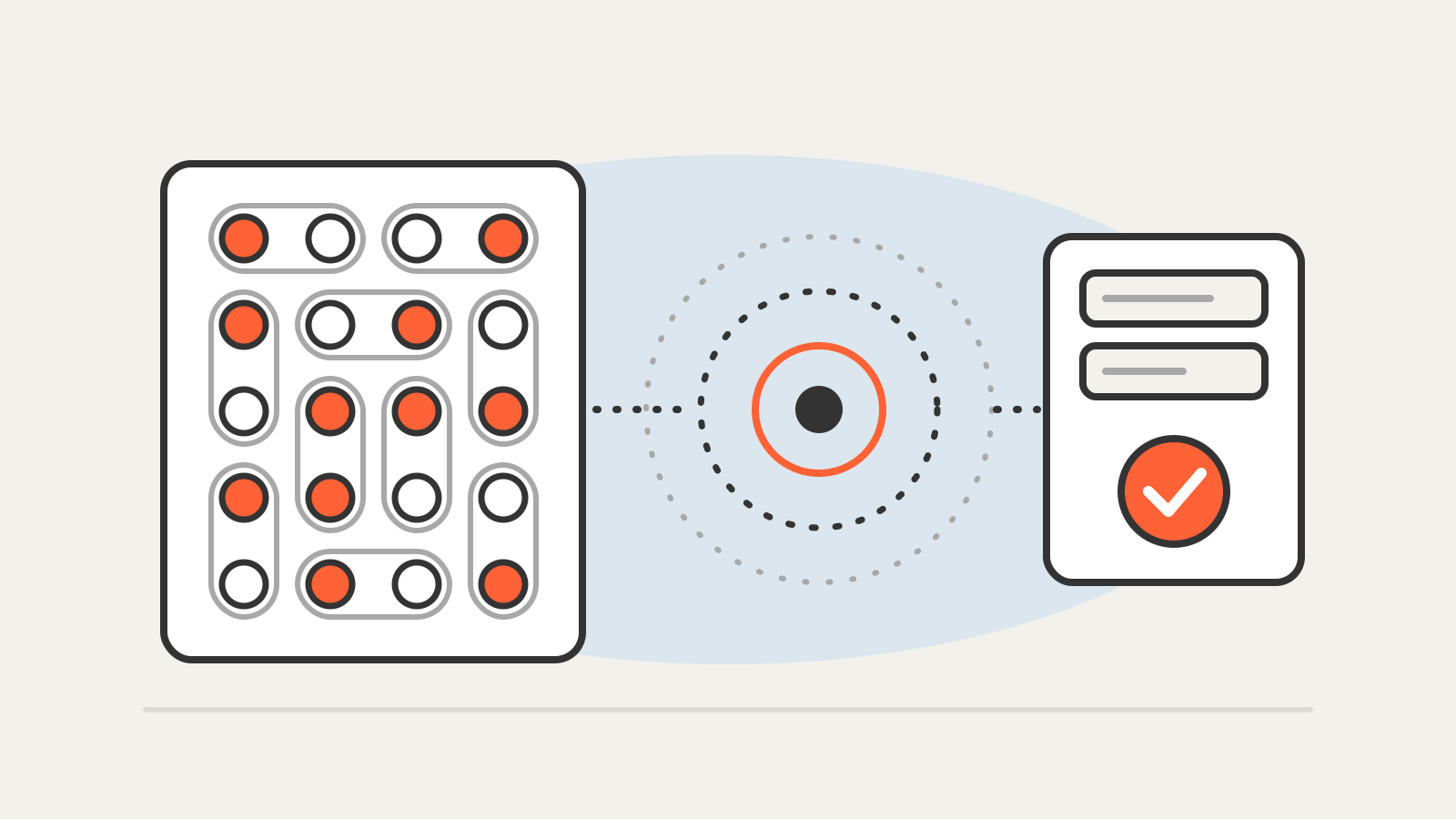
The IEEE 802.15.4z amendment added protections for exactly this case. FiRa says it introduced cryptography, random number generation and a Scrambled Timestamp Sequence (STS), a part of each UWB frame that uses cryptographic, pseudo-random sequences to protect timing data. Android’s documentation shows why the details matter. With a static STS, a ranging session remains susceptible to replay and relay attacks. With a provisioned STS, where a fresh session key is supplied, those attacks are mitigated. Google says provisioned STS is supported on all UWB-enabled devices running Android 14 or later.
UWB is not built for moving large files. FiRa says the IEEE 802.15.4z standard allows for small amounts of data, at speeds limited to a few tens of megabits per second.
Where you will find UWB
Phones, watches and trackers. Apple keeps a list of devices with its Ultra Wideband chip. The second-generation chip is in iPhone 15 models and later (except the iPhone 16e and 17e), iPhone Air, Apple Watch Series 9 and later, Apple Watch Ultra 2 and later, and the second-generation AirTag. iPhone 11 through 14, the first AirTag and HomePod mini use the first-generation chip. On Android, apps can use UWB on devices running Android 12 or later that report UWB hardware.
Car keys. The Car Connectivity Consortium’s Digital Key combines NFC, Bluetooth Low Energy and UWB. Its joint announcement with FiRa explains that the car measures distance to the phone from several transceivers, works out where the phone is, and decides whether to unlock the doors or allow the car to start. The consortium says UWB has been part of its Digital Key specification since 2019, and that Release 3, completed in 2021, brought UWB radios into cars and phones for these features.
Doors and buildings. FiRa’s secure ranging white paper uses a door lock as its main example: authorization is given only if the measured distance is within a set limit, and the system has to resist attacks that make a device seem closer than it is.
Availability also depends on where you are. Apple says UWB isn’t available in every country or region, because regulations require it to be turned off in some places or on some devices. Some features can be limited even where UWB is allowed: in Japan, for example, Apple says local rules disable some frequencies used by its second-generation chip.
UWB vs. Bluetooth
Most UWB devices also have Bluetooth, and they work together: Bluetooth finds the other device and sets up the session, and UWB measures the distance.
Bluetooth now has its own precise ranging feature. The Bluetooth SIG’s Channel Sounding uses phase-based ranging across many frequencies, with round-trip timing as a security check. The SIG says it was designed for accuracy within tens of centimeters, reports early implementations at about plus or minus 20 cm, and says measurements up to 150 meters are possible when both devices transmit at maximum power. Its technical overview adds that accuracy depends on the environment and on each vendor’s distance algorithm, which the specification does not define. Which approach wins in a given product will depend on hardware, cost and the security level the application needs.
For the other short-range radio in your phone, see our guide to what NFC is. For the newest Wi-Fi standard, see what Wi-Fi 7 is.