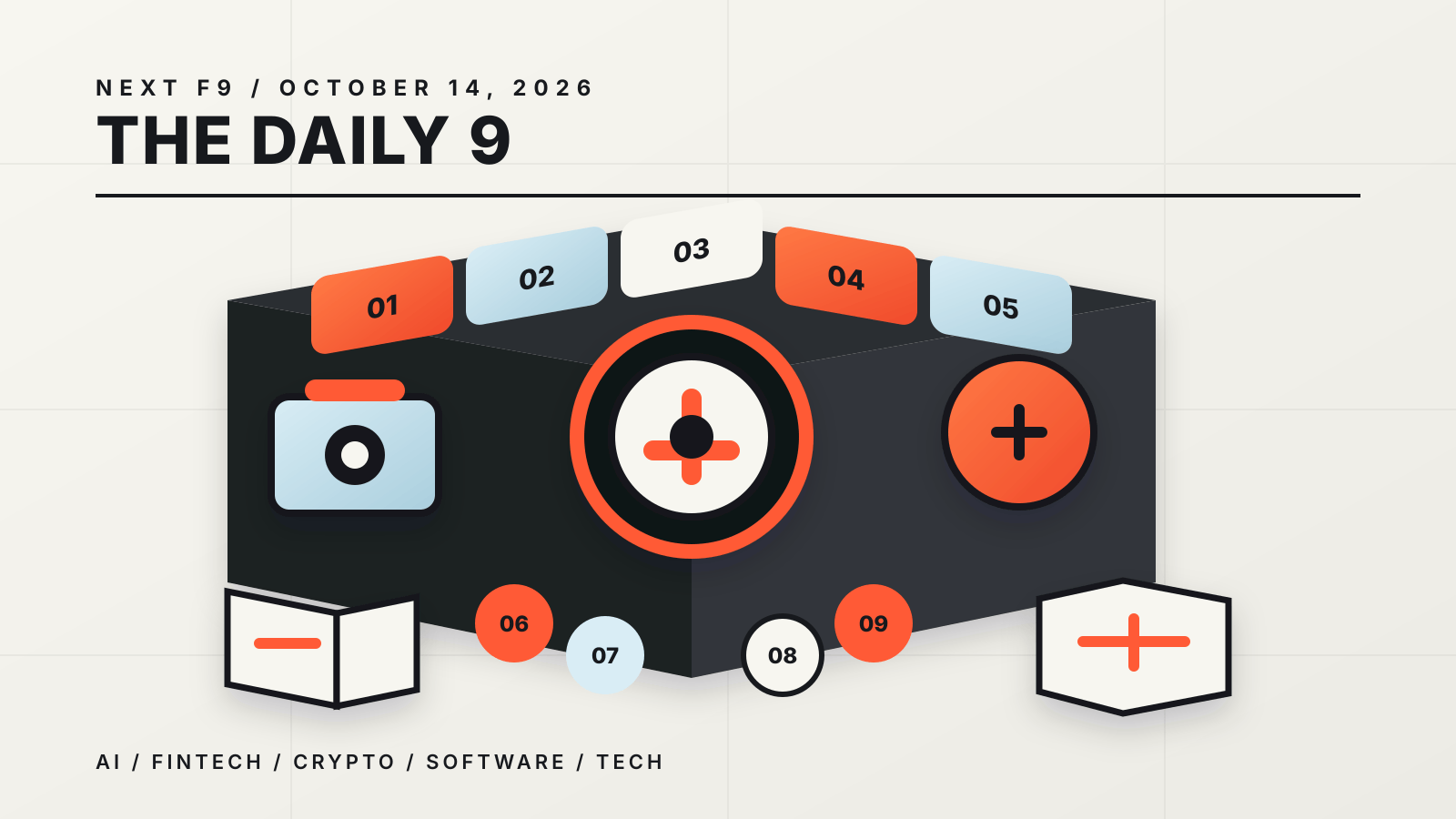
Daily 9 for October 14, 2026 tracks nine announcements published on October 13. The mix is unusually practical: enterprise AI controls, card-clearing groundwork, stablecoin infrastructure, retail agents, device software and an open hardware-security effort. Availability varies, so each item separates what is live now from pilots, preparation and future work. Browse the Daily 9 archive for earlier briefings.
01 / IFS puts its agentic-AI stack under one license
IFS launched IFS Intelligence on October 13 as the new umbrella for its industrial AI products, including AI agents, data services and governance. The company says the package is available now under one enterprise-wide license rather than separate user or module fees. Usage is subject to what IFS describes as fair-use limits on AI executions, so it is not unlimited compute. The launch announcement explains the commercial model and product scope.
02 / NVIDIA releases the full Run:ai platform as open source
NVIDIA said on October 13 that it had open-sourced the complete Run:ai platform, not only the scheduler it released earlier. The code covers workload orchestration, dynamic GPU allocation, inference acceleration and visibility across AI infrastructure. It is available through GitHub and as an NGC Community Product. NVIDIA also makes an important distinction: the community release does not include a paid subscription or enterprise support. See the technical announcement.
03 / Sophos makes AI Defense generally available
Sophos launched AI Defense on October 13 with general availability through Sophos Central. The product is designed to identify sanctioned and unsanctioned AI services, then apply controls using endpoint, network, identity and browser signals through the company’s Fusion system. Sophos says this can expose “shadow AI” and enforce different policies for different users or tools; those effectiveness claims come from the vendor and still depend on deployment. The release sets out the supported controls.
04 / Visa gets permission to prepare a China clearing business
Visa said on October 13 that the People’s Bank of China had granted its application to begin preparing a domestic bankcard clearing institution. This is a preparatory approval, not permission to start operating the service immediately. Visa must complete the required setup and regulatory steps before any launch. The distinction matters because clearing sits behind the familiar tap-or-insert experience described in our card-payment explainer. Visa’s statement gives the current status.
05 / Bakkt and Thredd plan a card service settled in stablecoins
Bakkt selected Thredd to support a U.S. credit-card-as-a-service program that would settle transactions in stablecoins, the companies announced on October 13. Their proof of concept is targeted for the first half of 2027, so this is not a consumer card available today. Delivery depends on technical readiness, client demand and approvals from banking and card-network partners. For the underlying asset mechanics, see how stablecoins hold their peg. Thredd’s release states the proposed timetable.
06 / Tether backs EFY Finance’s Latin American payment rails
Tether announced an investment in EFY Finance’s seed round on October 13. EFY provides payment and settlement infrastructure intended to connect businesses with stablecoin and local-currency rails across Latin America. The companies say the platform supports more than 12 currencies and corridors, can settle to local accounts in 17 countries and serves over 25,000 active accounts. Those are company-supplied figures, not independently audited metrics. Tether’s announcement does not disclose the investment amount.
07 / Spangle opens a retail shopping agent
Spangle launched Spangle Halo for select enterprise retailers on October 13. Instead of acting only for the shopper, Halo runs on the merchant side and is meant to carry product data, merchandising rules and brand controls into agent-led buying. The company says it supports Universal Commerce Protocol, Model Context Protocol and browser interactions, but access is selective rather than a general public rollout. Our AI agents versus chatbots guide explains the underlying distinction. The launch release describes the scope.
08 / AXIS OS 13 tightens defaults for network devices
Axis Communications announced AXIS OS 13 on October 13 for its network devices. The release changes several security defaults, including HTTPS-only communication, stronger password requirements and signed-application verification. Axis also says the update improves VAPIX configuration and addresses the Year 2038 time problem. Availability will vary by device and firmware channel, so the announcement should not be read as proof that every installed camera can update immediately. The company’s OS 13 overview lists the planned changes.
09 / Microsoft opens Project Tessera’s integrated HSM design
Microsoft introduced Project Tessera on October 13 with Marvell, Oracle and the Open Compute Project. The initiative publishes specifications, protocols, software, firmware and hardware designs for an integrated hardware security module, with materials available through GitHub. The design aims to bring protected key operations closer to server processors. This is an open engineering effort, not finished silicon in production: chip development remains future work. Microsoft’s project announcement explains the current deliverables and partners.