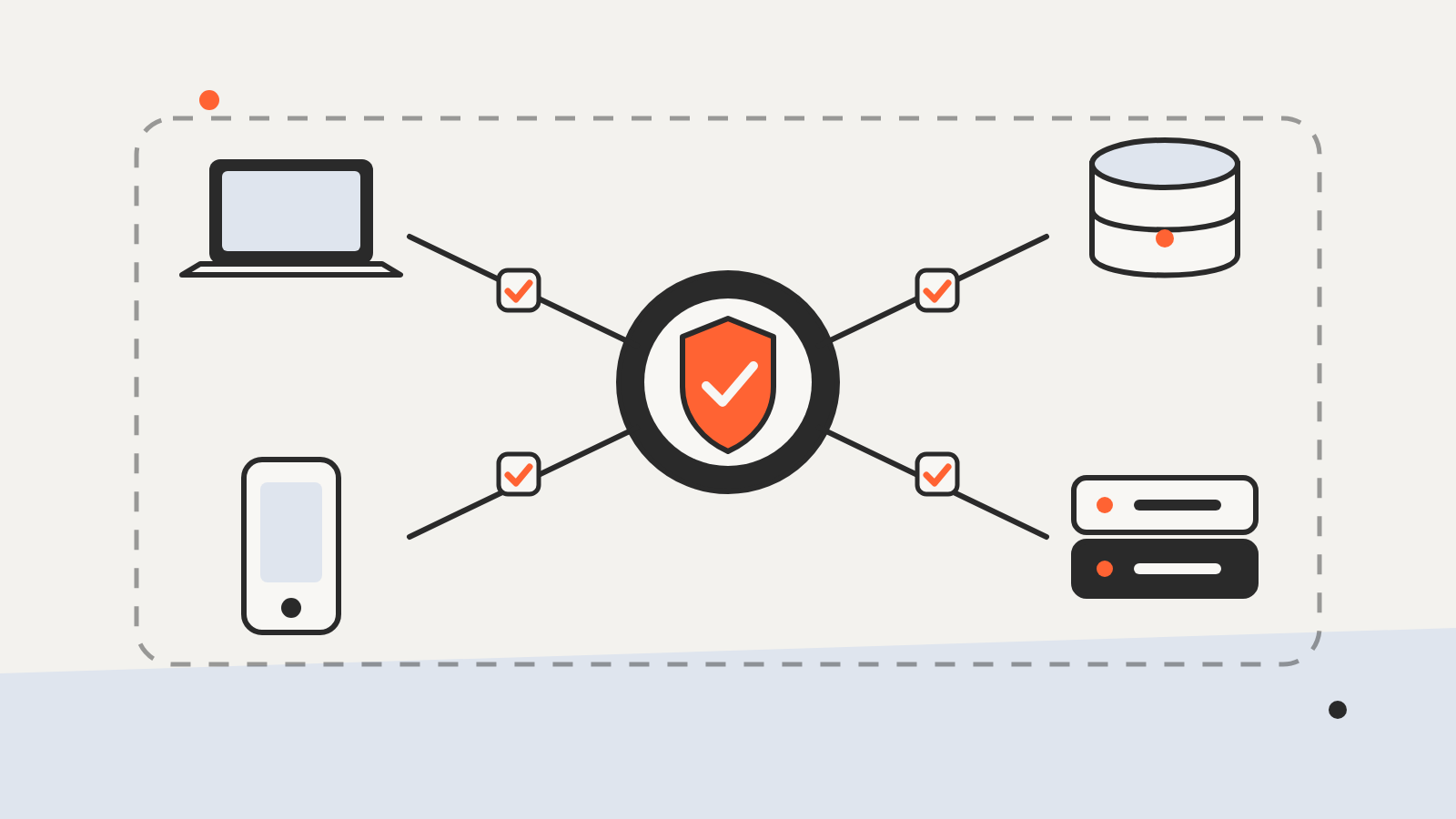
What is zero trust? It is a security approach that stops treating anything as safe just because of where it is. Under the older perimeter model, a user or device inside the company network was trusted and one outside was not. Zero trust drops that assumption: every request for access to a resource has to be authenticated and authorized, whether it comes from the office network or from a coffee shop.
The term is easy to mistake for a product. The U.S. National Institute of Standards and Technology (NIST) describes zero trust as an evolving set of cybersecurity paradigms that move defenses from static, network-based perimeters to a focus on users, assets and resources. This guide explains the core ideas using NIST’s definition and the U.S. government’s own zero trust strategy.
Quick answer Zero trust means no user, device or network location is trusted by default. Access to each resource is decided request by request, using identity, the health of the device and other signals, with the least access needed. It is a design approach rather than one tool you can buy.
Why the perimeter model stopped working
NIST’s guidance, Special Publication 800-207, Zero Trust Architecture, published in August 2020, says zero trust is a response to enterprise network trends: remote users, bring-your-own-device policies, and cloud-based assets that are not located within an enterprise-owned network boundary. When staff and data sit outside the office network, a wall around that network protects less. NIST’s definition says zero trust assumes no implicit trust is granted to assets or user accounts based solely on their physical or network location, or on whether a device is company-owned or personal.
The U.S. Office of Management and Budget made the same point in its January 26, 2022 memorandum M-22-09, which says the federal government can no longer depend on conventional perimeter-based defenses to protect critical systems and data.
The core ideas
NIST lists seven tenets of a zero trust architecture and notes that not all may be fully implemented in their purest form. In plain language, the main ideas are:
- Everything is a resource. All data sources and computing services count, and personally owned devices can count too if they reach company resources.
- Network location does not imply trust. A request from inside the legacy perimeter must meet the same security requirements as one from outside, and communication should be protected regardless of where it comes from.
- Access is granted per session. Trust in the requester is evaluated before access, with the least privileges needed, and getting into one resource does not automatically open another.
- Policy is dynamic. Decisions use the observable state of the user’s identity, the application and the requesting device, and may include behavior and environment, such as software versions on the device or unusual activity.
- The organization watches device health. No asset is inherently trusted; a device found to be compromised, vulnerable or unmanaged may be treated differently or denied.
- Authentication and authorization are strict and repeated. Access is a constant cycle of granting, scanning, adapting and re-evaluating, and NIST expects identity and asset management systems and multifactor authentication for some or all resources.
- Data feeds improvement. The organization collects as much information as possible about assets, traffic and access requests, and uses it to improve policy.
NIST adds that these tenets apply to work inside an organization or with partners, not to anonymous public or consumer-facing processes, where an organization cannot impose internal policies on outsiders.
What it looks like in practice
The U.S. federal strategy shows how the ideas turn into concrete requirements. OMB’s M-22-09 required agencies to meet specific zero trust goals by the end of fiscal year 2024, organized around the five pillars of the zero trust maturity model from the Cybersecurity and Infrastructure Security Agency (CISA): Identity, Devices, Networks, Applications and Workloads, and Data. Among the goals the memo sets:
| Pillar | Goal in OMB M-22-09 |
|---|---|
| Identity | Staff use enterprise-managed identities, protected by phishing-resistant multifactor authentication |
| Devices | A complete inventory of devices the government operates and authorizes, with the ability to prevent, detect and respond to incidents on them |
| Networks | Encrypt all DNS requests and HTTP traffic within the environment and begin breaking perimeters into isolated environments |
| Applications and workloads | Treat all applications as internet-connected, test them rigorously and welcome external vulnerability reports |
| Data | Deploy protections based on data categorization and monitor access to sensitive data, with enterprise-wide logging |
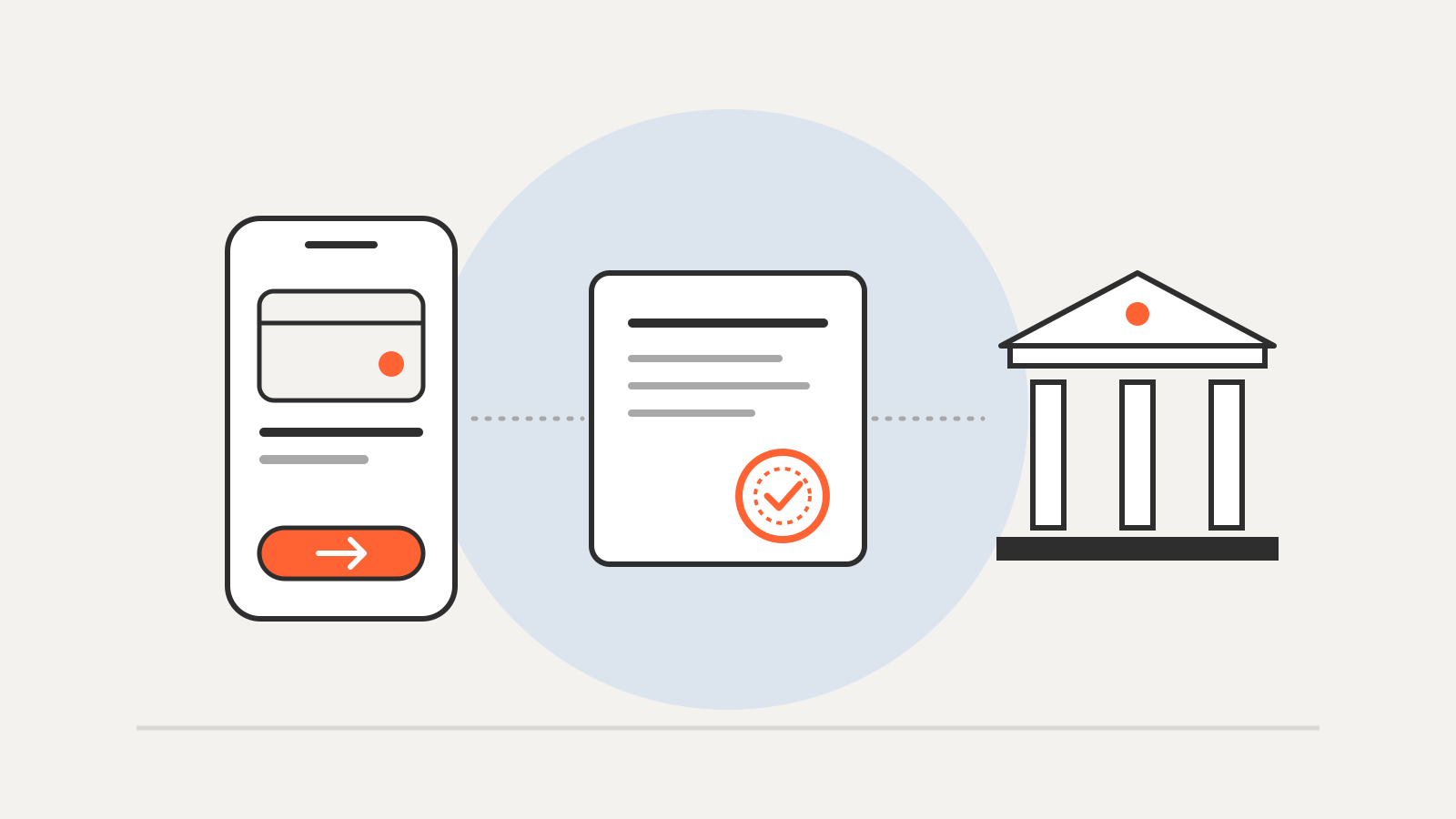
The identity rules are the most relevant to everyday users. The memo requires phishing-resistant MFA for agency staff, contractors and partners, and says it must be an option for public users. It also says agency systems must stop supporting authentication methods that fail to resist phishing, including phone numbers registered for SMS or voice codes, one-time codes and push notifications. For how those factors differ, see our guides to authenticator apps versus SMS codes, security keys and passkeys. The memo also says MFA must be enforced at the application layer, not the network layer, and that agencies should weigh at least one device-level signal alongside the user’s identity.
What zero trust does not mean
- It is not “trust nobody” in a literal sense. People and devices still get access; it is simply earned per request and kept as narrow as the task requires.
- It is not a single product. NIST describes an architecture and a set of principles; the memo breaks the work into pillars and many separate actions.
- It does not replace basics. Device health, patching and monitoring are part of the model. For background on a common attack, see our guide to what ransomware is.
- It is not instant. NIST says the tenets are an ideal goal and that organizations will not necessarily implement each in its purest form.