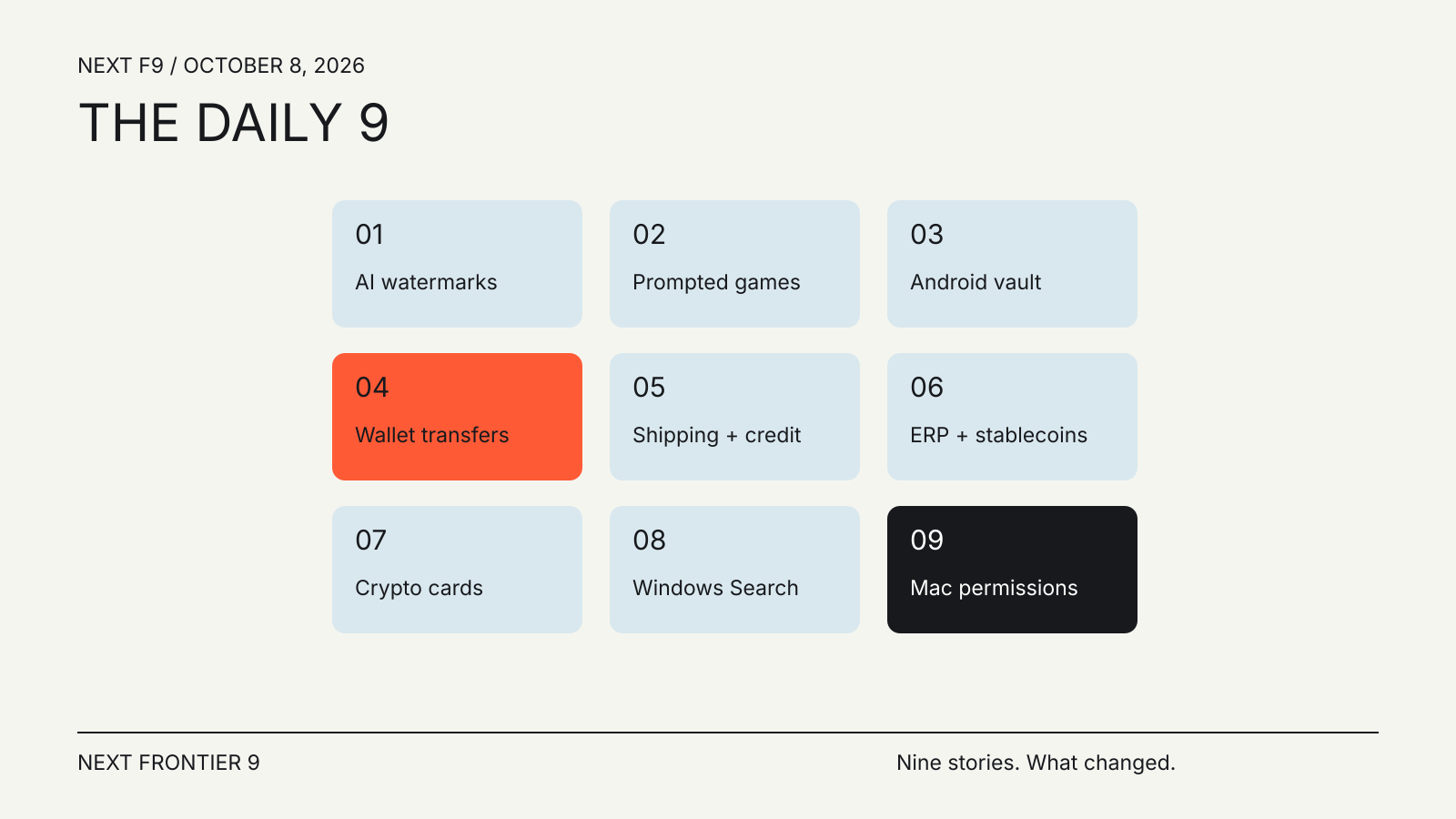
The Daily 9 for October 8, 2026 follows nine developments in AI, payments, crypto and device security. Most announcements are from October 6–8; Apple’s October 2 permission update is included as relevant context. Availability dates below distinguish products you can use from previews and plans.
01 / SynthID Detector opens to a wider audience
Google opened SynthID Detector globally in English on October 7. The tool checks images, video and audio for watermarks used by Google and participating partners. That gives readers another way to investigate a file’s origin, although its scope is the supported watermark systems. An absence of a detected watermark does not establish that a file is authentic or human-made. The announcement also names Apple as a future participant, so that planned support should be kept separate from partners already covered.
Google’s announcement · AI desk
02 / Google launches a game-making experiment
Playground, announced October 7, lets users describe a game in prompts, revise its rules and share the result through a browser. Launch access is for U.S. users aged 18 and over, with tiered creation access tied to Google AI subscriptions. Multiplayer support applies to selected genres. Google also describes an upcoming Unity Spark integration, currently in testing, with a closed beta to come. The useful distinction for creators is between Playground’s available experiment and the more advanced Unity tools still being prepared.
03 / Android separates personal AI context from the host system
Google introduced AISeal on October 7, an enclave architecture built on Android’s virtualization framework and protected virtual machines. Its first milestone is hardware-isolated storage for the personal context that assistants may use. Google describes the design as protecting that context even if the host operating system is compromised. Moving inference and autonomous agents into the vault, direct NPU access and confidential cloud extensions remain future work. Device support and implementation therefore matter more than assuming every Android AI feature already runs inside this environment.
Android’s technical announcement · On-device and cloud processing
04 / Samsung Wallet prepares USDC transfers
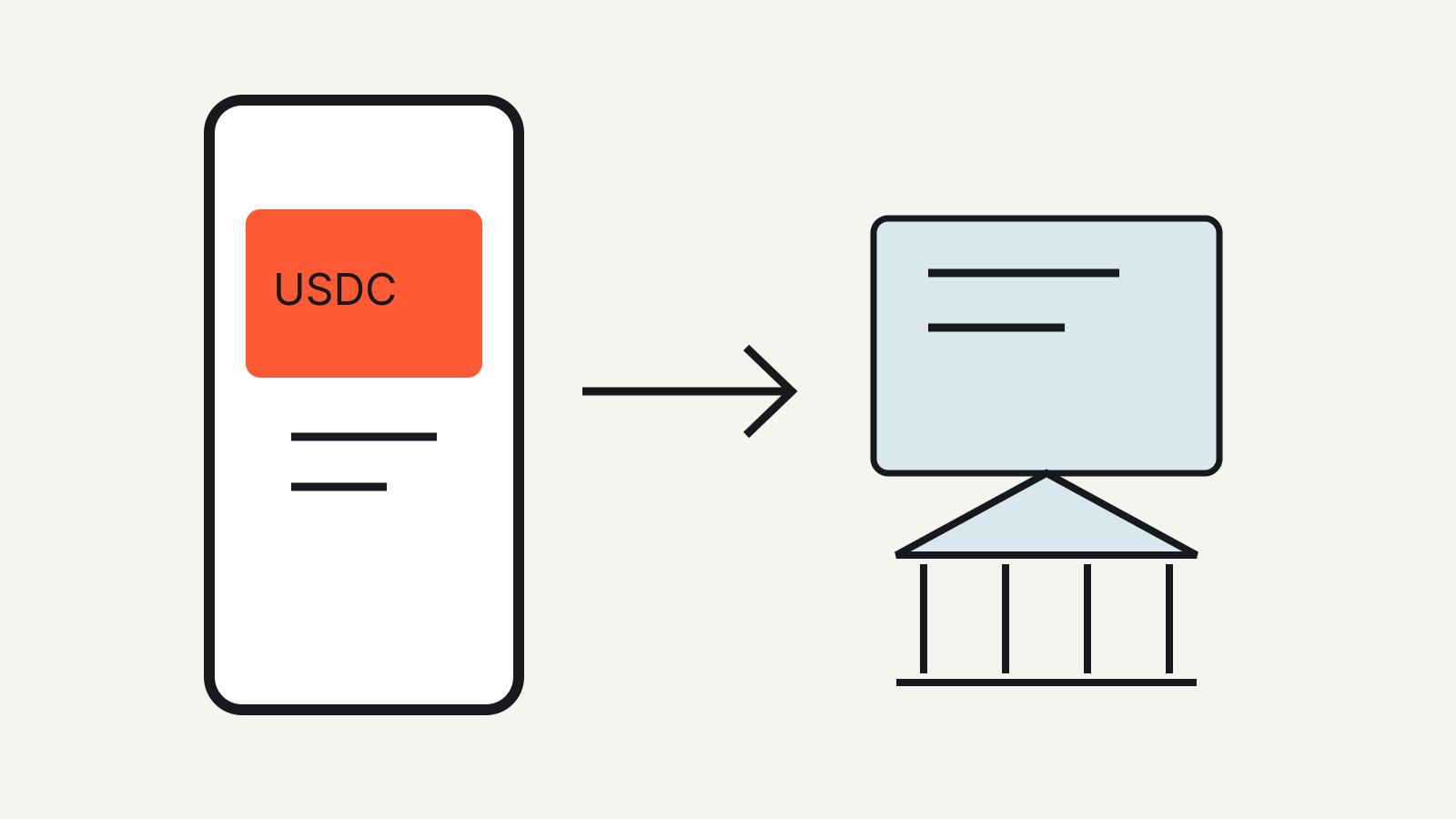
Samsung says stablecoin functionality will reach eligible U.S. Galaxy users in the last week of October. Its press page is dated October 8, while the release itself carries an October 7 dateline. USDC transfers to compatible wallets and transfers to qualifying overseas bank accounts are different routes: the bank route has destination-dependent fees disclosed before confirmation. Adults need a compatible device, registration and identity verification. Bastion and Coinbase provide the custody infrastructure. The announcement describes an upcoming rollout, so readers should not assume the feature is available today.
Read our Samsung Wallet report · Samsung’s announcement and eligibility notes · How stablecoins work
05 / FedEx shipping signals enter a financing plan
FedEx Dataworks and Stripe announced a collaboration on October 6 that would combine logistics signals with Stripe’s financial infrastructure. The first joint solution is planned for early 2027, with the companies seeking to improve access to financing for small and medium-sized businesses. FedEx also plans to add more than 50 payment methods through Stripe. Shipment activity could provide another input to credit analysis, but the release offers no universal approval rule or funding guarantee. A partnership announcement is not evidence that every FedEx customer can already use the new financing.
Stripe’s announcement · Fintech desk
06 / Circle and Tereina put stablecoins into ERP workflows
Circle and SAP-backed Tereina announced their USDC and EURC partnership on October 7, starting with SAP Cloud ERP. Circle says access is available to eligible SAP customers through SAP Pay, while customer proof-of-value programs and specialist training are planned over the coming months. The change concerns finance teams working inside existing business applications. Eligibility and implementation still determine access; the announcement does not establish that every SAP customer has adopted either token. USDC and EURC also serve different currency-denominated workflows.
Circle’s announcement · Crypto desk
07 / Gate announces a crypto-linked Visa card
Gate’s October 8 company-issued release describes a Visa collaboration and an expected launch across more than 40 markets. The proposed spending flow converts eligible crypto assets into fiat currency when the card is used. Gate points customers to product terms for market coverage, assets and eligibility, while its broader Gate Money app already has a separate release. Those are distinct availability claims. Merchant acceptance on the Visa network does not mean that residents of every country can obtain this card or that all of their assets qualify.
Gate’s company-issued release · What a crypto wallet stores
08 / Windows Search tests inline actions
Microsoft began rolling out a redesigned taskbar search experience to Windows Insiders on October 7. The initial Experimental-channel preview supports English and combines results in one list, with actions such as changing a setting or arranging windows. Richer previews and phone actions are described as coming later, while a Start-menu version is work for next year. Microsoft reports performance improvements from its own early testing. This is a preview for supported Insider builds, rather than a general Windows release or an independent performance test.
Microsoft’s preview details · Software desk
09 / Apple plans stricter Full Disk Access controls
Apple’s October 2 developer notice says macOS will require more explicit user action before an app receives Full Disk Access. The company links its concern to increasingly capable AI agents and the breadth of data the permission exposes. Apple has not specified the new interface, release date or macOS version, so the notice should not be read as a shipped permission change. For now, understanding which apps already have this access remains useful. Our existing report explains the permission and what Apple has left unresolved.